2025 forced the world to see two truths at once: climate risks are accelerating faster than expected, and yet global momentum behind Nature-Based Solutions (NBS) is stronger, more scientific, and more collaborative than ever.
At OpenForests, we sit exactly in this intersection.
The data reminds us how much urgency remains. But every day on explorer.land, we see something equally important: when communities, funders, and practitioners work with transparency and trust, restoration works — visibly, measurably, and at scale.
This recap explores the two sides of 2025:
- The ecological pressures demanding fast, credible action
- The breakthroughs showing that restoration and conservation are gaining ground
Global Climate Trends 2025: a still-rising emergency
Scientific assessments confirm we are approaching critical ecological thresholds — and the window for limiting global warming to 1.5°C is narrowing.
1. Fossil fuel emissions hit a record high
In 2025, global fossil CO₂ emissions are projected to reach a record 38.1 billion tonnes, an increase of 1.1% from last year.
Atmospheric CO₂ concentrations are expected to hit 425.7 ppm, a historic high.
At this pace, the world has roughly four years left before the remaining carbon budget for 1.5°C is depleted.
This is not just a scientific benchmark. It represents the moment when everyday impacts like extreme heat, severe flooding, and ecosystem collapse become increasingly irreversible.

2. Biodiversity in 2025: Cascading declines continues
The latest IUCN Red List shows that 61% of all assessed bird species are now in decline, driven by habitat loss, agricultural expansion, and climate stress. (Source: BirdLife International, 2025)
Warming seas have accelerated coral bleaching: the Great Barrier Reef experienced its fifth mass bleaching event in eight years. (Source: AIMS, 2024)

These numbers are not warnings.
They are instructions for where we must respond with precision, funding, and long-term commitment.
8 positive news for the planet in 2025
Despite the severity of the data, 2025 also delivered measurable, science-backed progress. These 8 breakthroughs show that when restoration efforts are well-funded, well-monitored, and grounded in collaboration, nature responds.
1. Green sea turtle populations rebound
The Green Sea Turtle (Chelonia mydas) improved on the IUCN Red List after decades of global conservation efforts — proof that long-term protection pays off.

Source: Earth.org
2. Endemic island birds recover in Rodrigues
Both the Rodrigues Warbler (Acrocephalus rodericanus) and Rodrigues Fody (Foudia flavicans) were downlisted thanks to long-term native habitat restoration. A powerful reminder of what local, sustained conservation can achieve.

Source: BirdLife.org
3. Australia passes landmark environmental reforms
New federal legislation placed native forest logging under stricter national oversight, improving legal protection for critical ecosystems.

Source: Australian Government, Department of Climate, Energy, the Environment and Water
4. EU Nature Restoration plans move into action
Member States submitted national restoration plans under the Nature Restoration Law, setting the stage for coordinated rewilding across Europe.

Source: European Comission
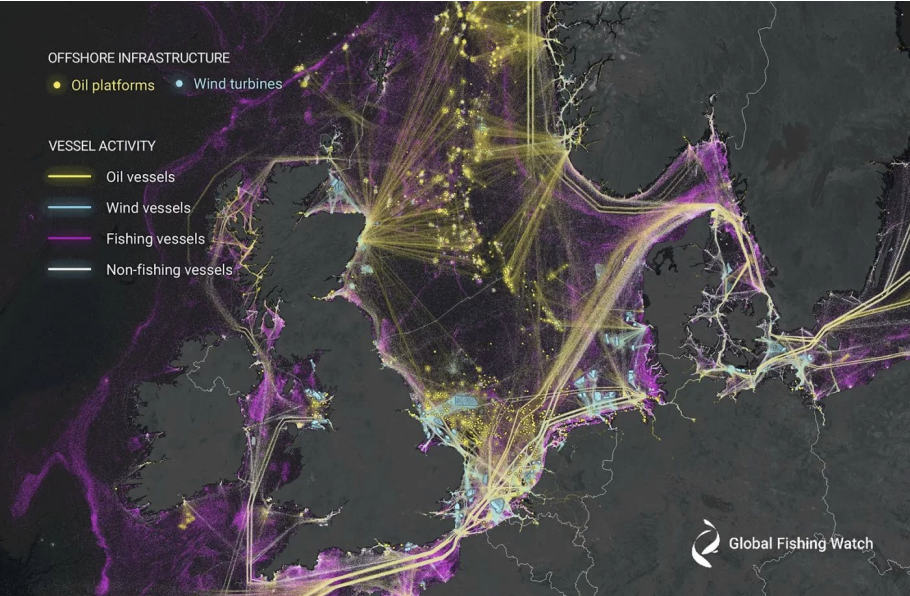
5. AI Earth Observation becomes a game-changer
New partnerships (Google, WRI) delivered meter-level, near-real-time environmental monitoring, enabling faster detection of forest degradation and illegal activity.
This unlocks faster, more credible monitoring for platforms like explorer.land.
Source: Report – AI for Nature. How AI can democratize and scale action on nature
6. Net forest loss has declined since 1990
FAO data shows global net forest loss (deforestation minus regrowth) has significantly decreased since 1990. Forests remain under pressure, but the long-term trajectory is improving.

Source: FAO
Trust, transparency, and collaboration
These positive signals show a clear pattern:
restoration works when it is evidence-based, transparent, and locally grounded.
2025 was not the year we turned the tide.
But it was a year that proved beyond doubt that change is happening — and accelerating — in the right direction.
If we combine scientific rigor, transparent data, and community-led action, the breakthroughs we saw this year can become the baseline for every year that follows.
We still have time.
We still have momentum.
And most importantly — we still have a choice.
At OpenForests, our role is to turn complex restoration data into transparent, verifiable stories that empower funders, environmental organizations, NbS, policymakers, and communities.
Through our transparency hub explorer.land and our consulting work, we help projects:
- increase transparency
- standardize monitoring
- verify outcomes through geospatial and field data
- communicate impact in ways that attract funding
- share replicable success stories
Because the battle for the planet will be lead by those who can prove impact, build trust, and collaborate at scale.