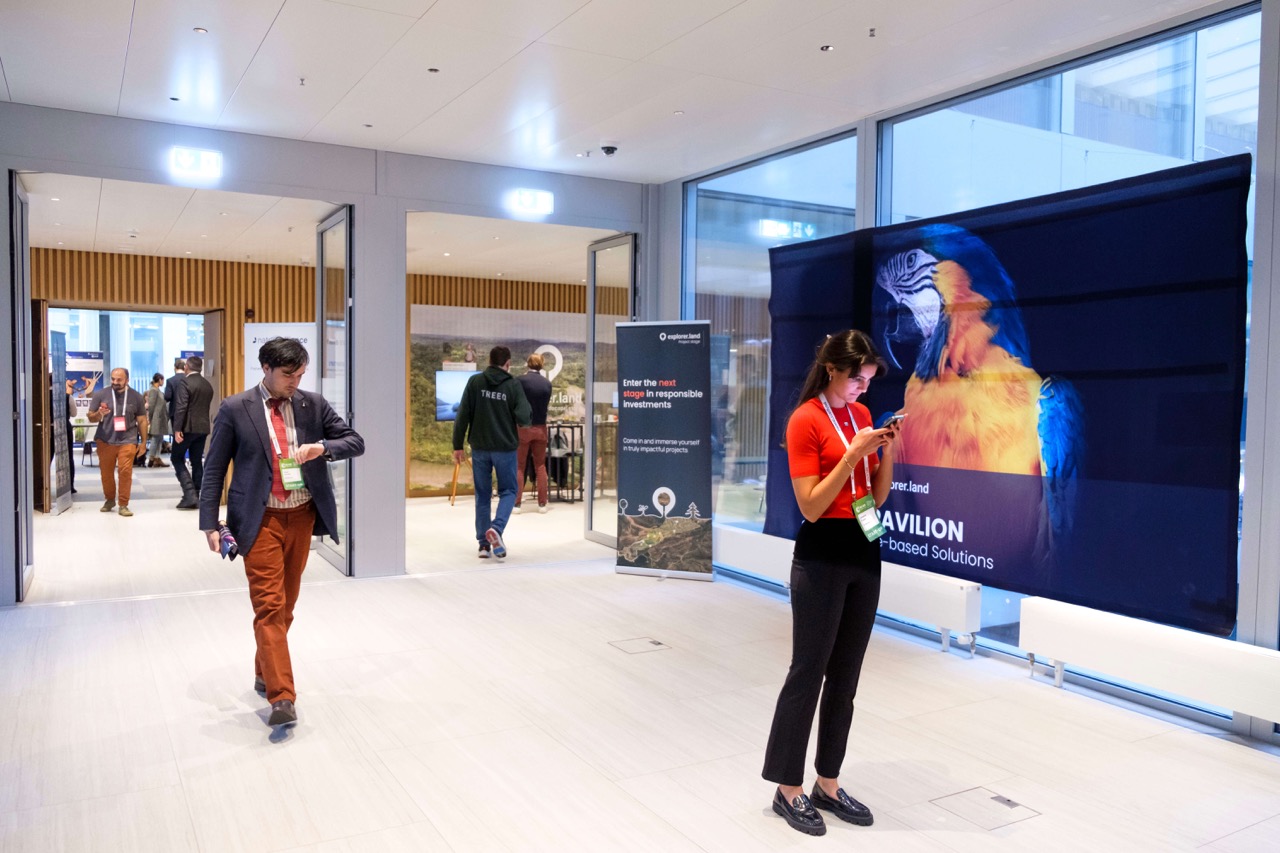
In December 2023, OpenForests hosted the Nature Pavilion at the NOAH Conference in Zurich.
At first glance, it may have looked like an exhibition space. But its purpose was much bigger.
The Nature Pavilion was designed as a meeting point for nature-based projects, technology providers, businesses, funders, and responsible investors. It brought together people working on different sides of the same challenge: how to restore and protect nature at scale, while building the trust, transparency, and collaboration needed to move more capital into real-world impact.
At a time when nature-based solutions are gaining attention from companies, investors, and policymakers, the Pavilion created something that is still too rare in the sector: a shared space where projects, data, technology, finance, and storytelling could meet.
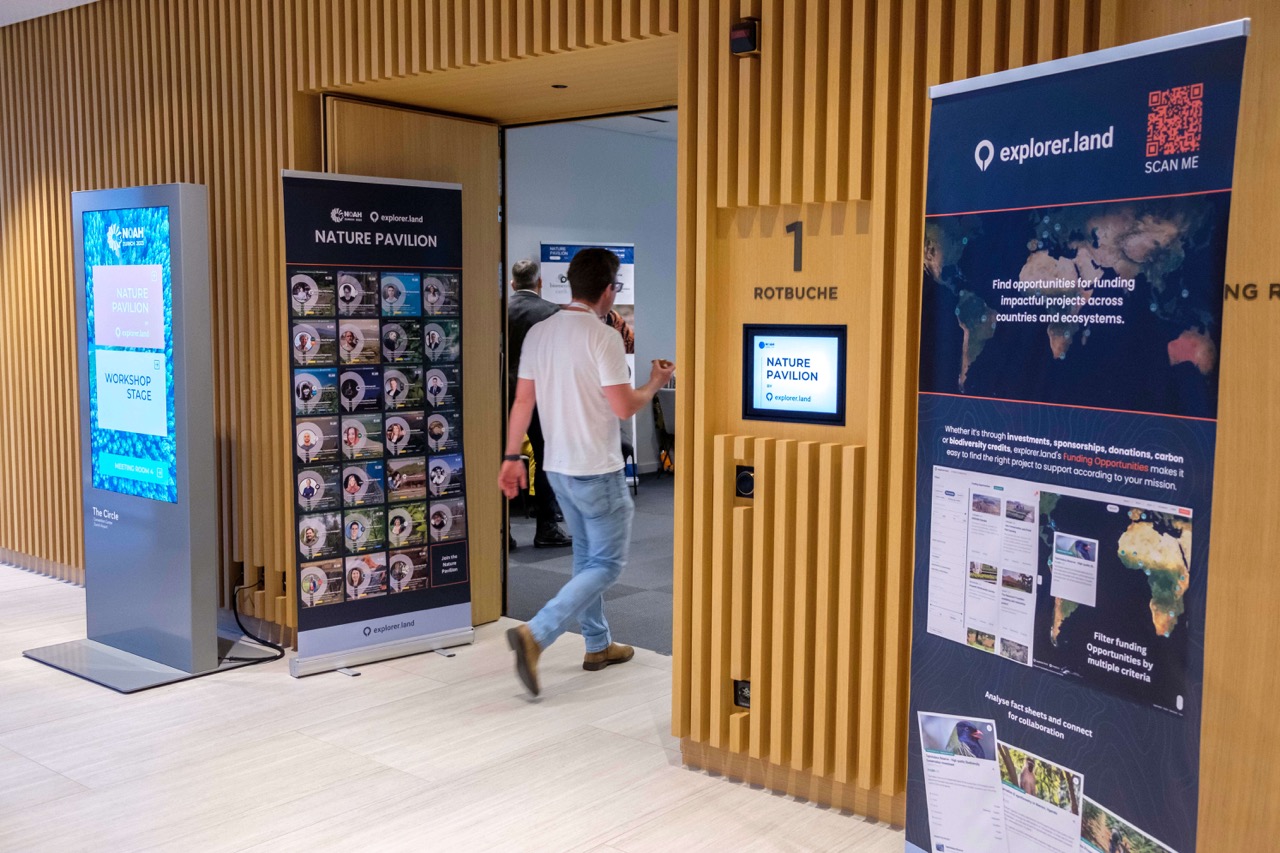
What was the Nature Pavilion?
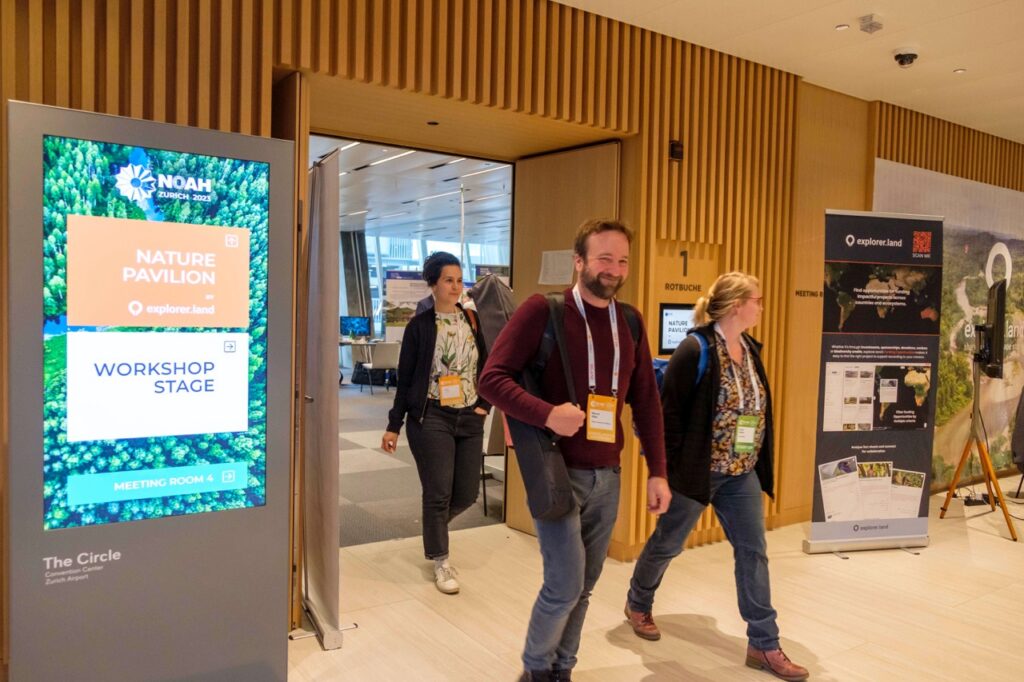
The Nature Pavilion took place during NOAH Conference Zurich 2023, held on 13–14 December at The Circle in Zurich.
NOAH is known for bringing together growth companies, investors, sustainability leaders, and entrepreneurs. In 2023, the conference placed a strong emphasis on sustainability and natural capital, creating a timely setting for a dedicated space focused on nature-based solutions.
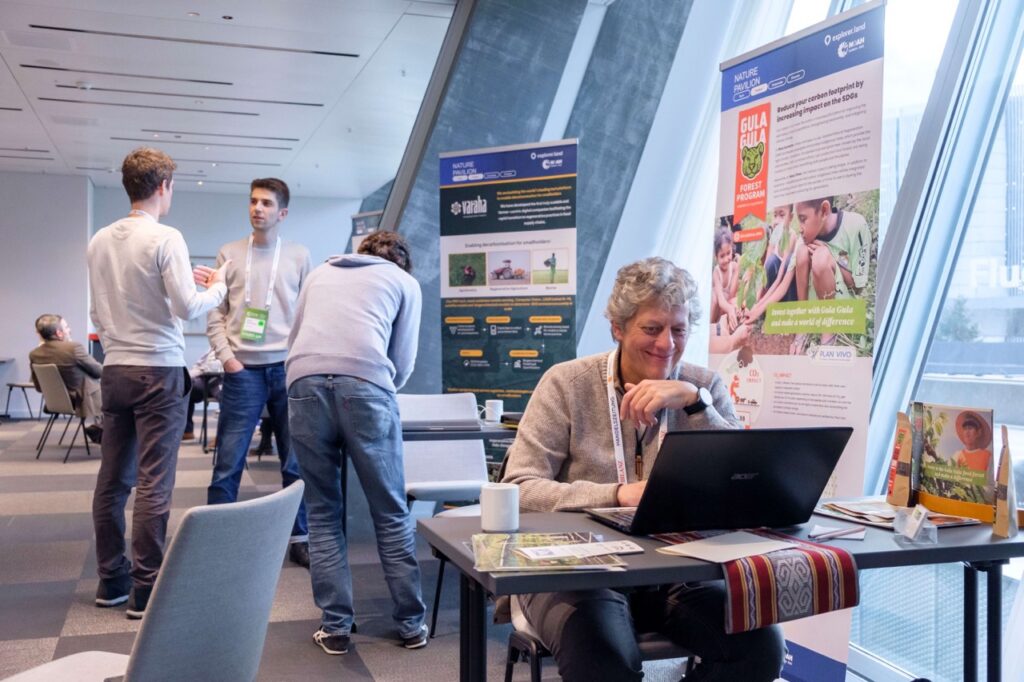
The Nature Pavilion was created as an interactive hub for climate and biodiversity action. It was not intended as a passive booth or traditional exhibition. Instead, it was designed to encourage exchange, discussion, demonstrations, and collaboration between different actors working across the nature-based solutions ecosystem.
The idea was simple: if we want nature-based projects to scale, they need more than visibility. They need trust. They need data. They need funding. They need technology. And they need spaces where the right people can find each other.
Why did OpenForests create the Nature Pavillon?
At OpenForests, we work with restoration and conservation initiatives around the world to help them map, monitor, and communicate their impact.
Through explorer.land, we see every day how much good work is happening on the ground, from forest restoration and regenerative agriculture to biodiversity conservation, carbon projects, watershed protection, and community-led landscape restoration.
But we also see one of the biggest barriers in the sector: many high-quality nature projects remain difficult to discover, understand, compare, or fund.
Investors and companies are increasingly interested in nature. Yet they often struggle to identify credible projects, understand their context, assess their impact pathway, or build confidence in the information being shared.
The Nature Pavilion was a response to that gap.
It created a physical extension of what explorer.land aims to do digitally: make nature-based projects more visible, more transparent, and easier to connect with the stakeholders who can support them.
Who was there?
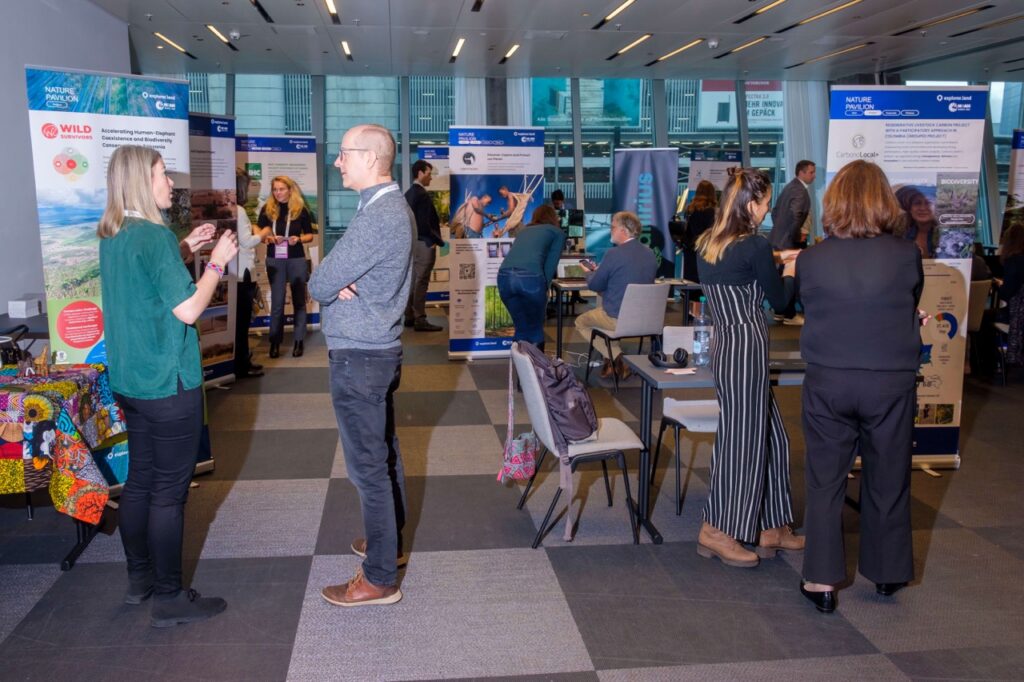
The Nature Pavilion brought together a diverse group of participants from across the nature-based solutions space.
There were restoration and conservation projects working on forests, biodiversity, regenerative agriculture, sustainable land use, wildlife protection, carbon, and community-based conservation.
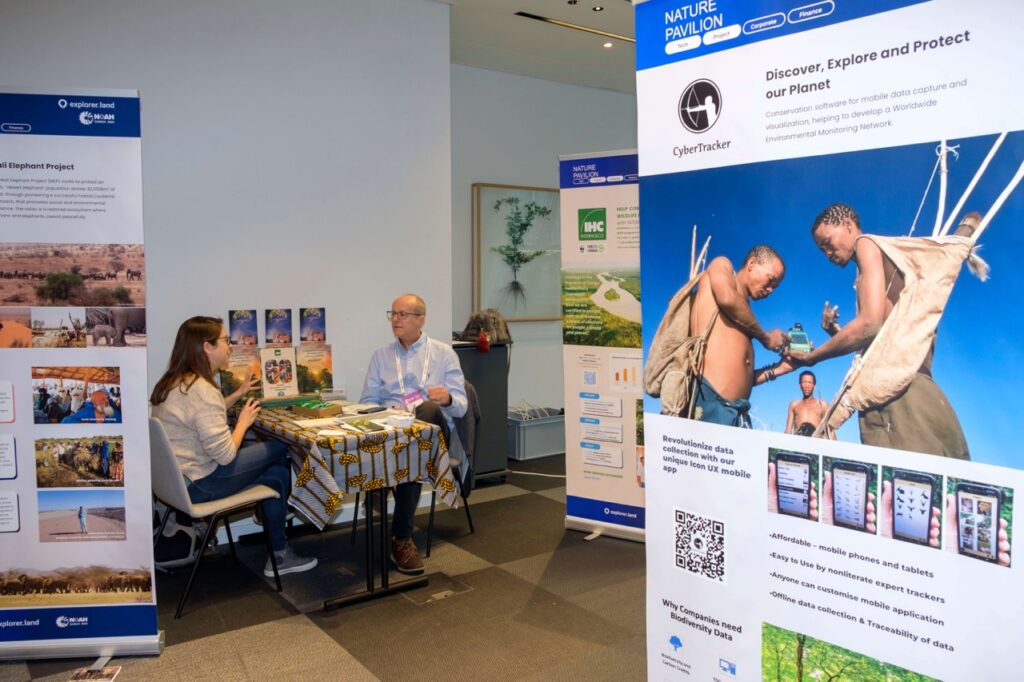
There were nature tech and data providers working with remote sensing, biodiversity monitoring, bioacoustics, mobile data collection, satellite imagery, AI, drone-based approaches, and digital mapping.
There were finance and marketplace actors exploring how to channel more capital into nature-based solutions, including through carbon markets, ecosystem services, CSR funding, corporate sponsorship, and investment models.
There were also businesses and corporate sustainability actors looking at how nature connects with supply chains, climate commitments, risk management, and long-term resilience.
This diversity was one of the strongest aspects of the Pavilion. It showed that nature-based solutions cannot be reduced to one type of project, one type of funder, or one type of metric. The sector is complex and that complexity needs to be made visible, not simplified away.
Highlight 1: Nature finance needs connection, not only capital
One of the clearest takeaways from the Nature Pavilion was that scaling nature finance is not only about increasing the amount of money available.
It is also about improving the connection between capital and credible projects.
Many restoration and conservation initiatives are doing important work, but they are not always visible to the funders, investors, or companies looking for meaningful nature engagement. At the same time, many funders want to support nature-based solutions but lack the tools, context, or confidence to identify the right opportunities.
The Nature Pavilion helped bridge this gap by bringing both sides into the same space.
It showed that matchmaking in nature finance is not just a transaction. It is a process of building understanding, trust, and long-term relationships.

Highlight 2: Transparency is becoming a foundation for trust
Another strong theme was transparency. Nature-based projects are increasingly expected to show where they work, what they do, who is involved, what data they collect, and how their impact is developing over time.
This is especially important in a context where companies and investors are under growing pressure to avoid vague claims, weak reporting, or greenwashing.
The Pavilion made clear that transparency is not only about compliance. It is about communication. It helps projects explain their work more clearly, helps funders understand what they are supporting, and helps the wider public see how restoration and conservation efforts unfold on the ground.
For OpenForests, this is central. We believe that nature projects need better tools to make their impact visible not only through numbers, but also through maps, stories, evidence, and context.
Highlight 3: Nature tech is becoming essential infrastructure
The Nature Pavilion also showed how quickly the nature tech ecosystem is developing.
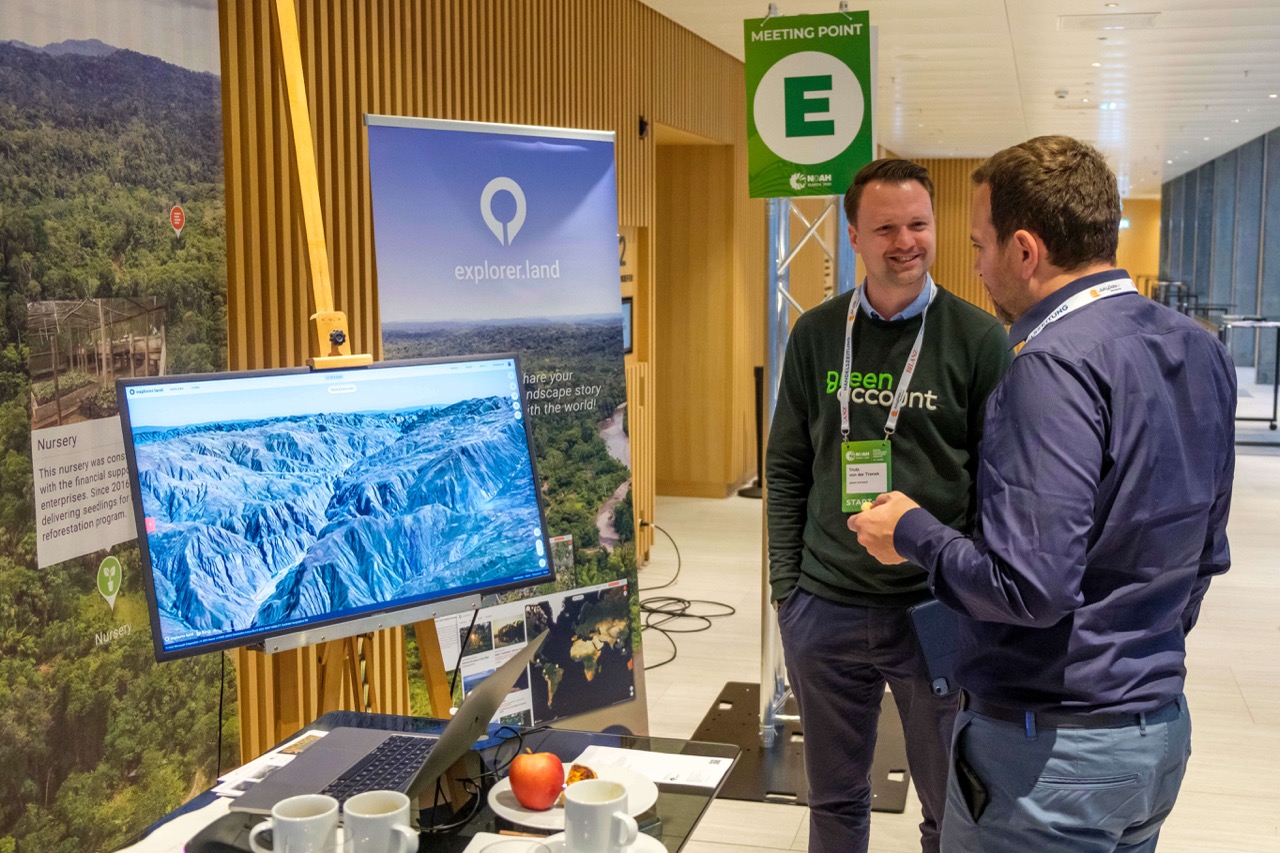
From remote sensing and satellite monitoring to bioacoustics, camera traps, mobile data collection, drone-based approaches, and AI-supported analysis, technology is becoming an important part of how nature projects are monitored, verified, and communicated.
But the most interesting point is not technology for its own sake.
The value of nature tech lies in how it supports better decisions, better monitoring, and better transparency. A satellite layer, biodiversity sensor, or project map only becomes meaningful when it helps people understand what is happening in a landscape and why it matters.
The Pavilion highlighted the potential of combining field knowledge with digital tools and the need to make those tools accessible and useful for project teams, funders, and partners.
Highlight 4: Nature-based projects are not one single asset class
The Pavilion also made visible the diversity of nature-based solutions.
Some projects focused on forest restoration. Others worked on biodiversity conservation, regenerative agriculture, sustainable value chains, wildlife protection, carbon, ecosystem services, or community resilience.
This matters because nature finance often tries to simplify projects into comparable categories. But real landscapes are not simple. They involve ecological, social, cultural, economic, and governance dimensions.
A forest carbon project, a regenerative agriculture initiative, a biodiversity conservation program, and a community-led restoration landscape may all contribute to climate and nature goals, but they require different types of monitoring, funding, communication, and support.
A key lesson from the Pavilion is that investors and businesses need to understand this diversity if they want to engage with nature responsibly.
Highlight 5: Collaboration is not optional
Perhaps the most important message of the Nature Pavilion was that no single actor can solve the nature funding gap alone.
Project developers need visibility and support. Funders need credible opportunities. Businesses need better ways to engage with nature. Technology providers need real-world applications. Investors need transparency and confidence. Communities need to be respected as central actors in the landscapes where projects take place.
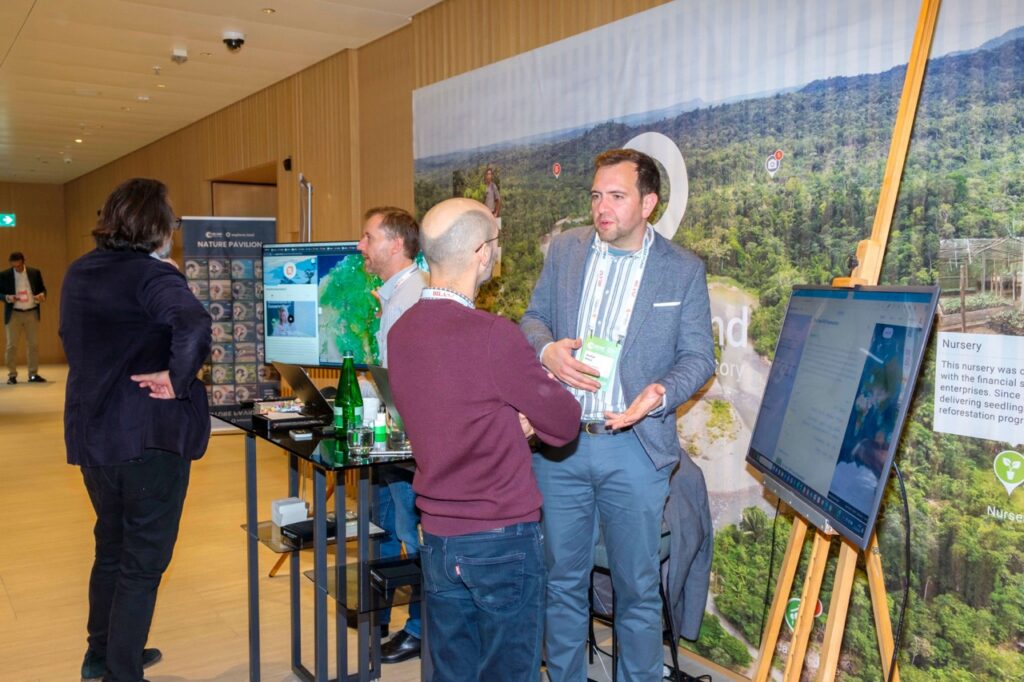
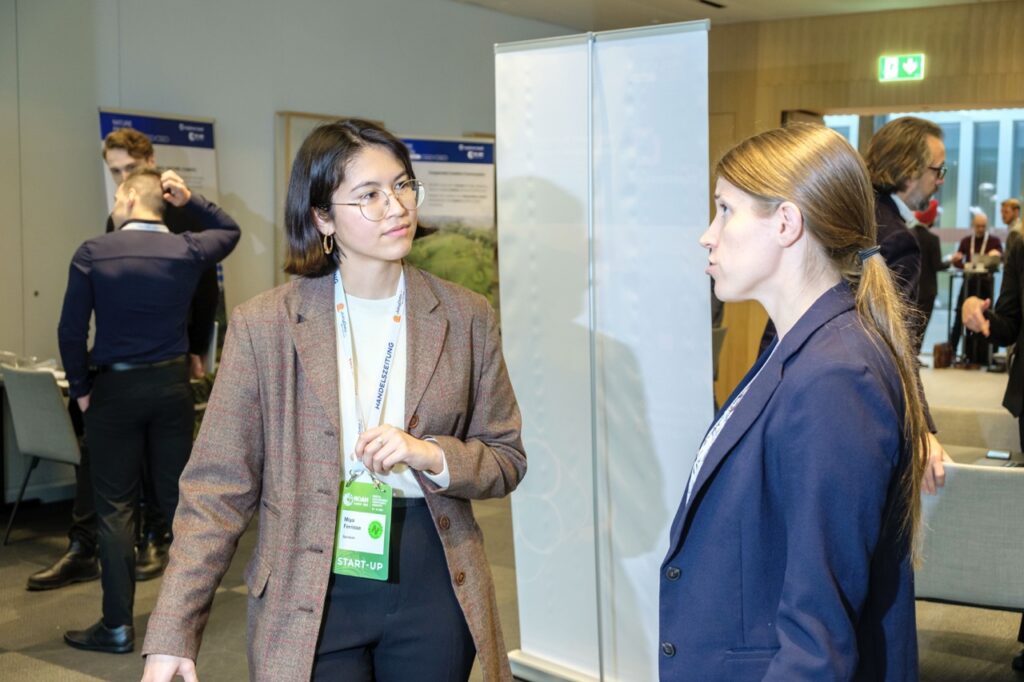
The Pavilion created a space where these actors could meet, ask questions, exchange ideas, and explore partnerships.
That kind of collaboration is essential if nature-based solutions are to move beyond isolated success stories and become part of a broader transition toward regenerative landscapes and nature-positive economies.
What the Nature Pavilion means for OpenForests
For OpenForests, the Nature Pavilion was closely connected to our mission.
Since 2011, we have worked to support restoration and conservation through digital tools, data, and transparent communication. With explorer.land, we provide a platform where nature-based projects can be mapped, documented, monitored, and shared with funders, partners, and the public.
The Nature Pavilion brought that mission into a physical space.
It showed that transparency is not only a digital feature. It is a way of building relationships. It is a way of helping people see what is happening on the ground. And it is a way of making nature projects more understandable, credible, and investable.
Looking ahead
The Nature Pavilion at NOAH 2023 was a snapshot of a sector in transition.
Nature-based solutions are moving from the margins into the center of climate, biodiversity, and business discussions. But for this transition to be meaningful, the sector needs more than ambition.
It needs credible projects. It needs transparent data. It needs better monitoring. It needs responsible funding. And it needs collaboration between people who do not always sit at the same table.
That is what the Nature Pavilion set out to support.
And it remains one of the central questions for OpenForests today: how can we help nature-based projects become more visible, more transparent, and better connected to the people and organizations that can support their long-term impact?