Key Highlights
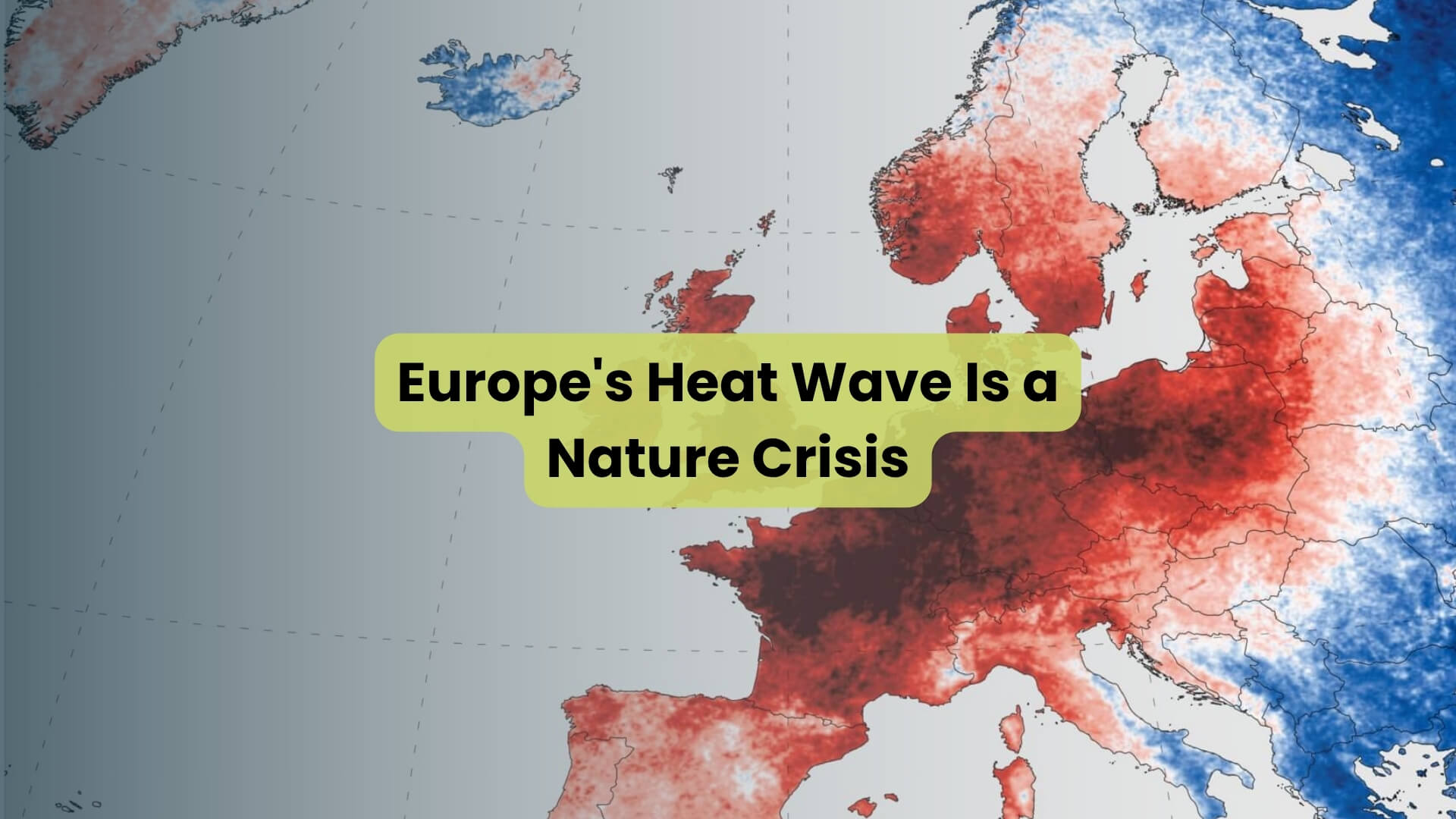
- Europe is the planet’s fastest-warming continent, heating at two to three times the global average. June 2026 brought France’s hottest day on record, with temperatures reaching 44.3°C in Landes.
- More than 62,000 people died from heat-related causes in Europe during 2024, the hottest year on record at the time.
- Nature-based solutions reduce daytime temperatures by an average of 2.04°C during hot periods, based on a meta-analysis of 373 peer-reviewed studies.
- Peatlands cover only 3% of the Earth’s land surface but store up to 44% of all soil carbon, more than all the world’s forests combined.
- $44 trillion of global economic value generation is currently at risk from nature loss.
- Ecosystem restoration and protection can deliver approximately 30% of the emissions reductions needed to limit warming to 1.5°C, yet attract only a fraction of the climate finance directed elsewhere.
What is happening to Europe in 2026
Europe is in the grip of its second extreme heat dome in two months. On 24 June 2026, France recorded its hottest day ever, with a national thermal indicator of 29.8°C and a single high of 44.3°C in Pissos, in the southwest (NBC News, 24 June 2026). Red alerts were issued across Britain, Germany, Austria, and Switzerland, with school closures, transport disruption, and power outages reported across the region. The UK broke its all-time June temperature record, reaching 36°C in southern England (CNN, 24 June 2026).
Europe is the planet’s fastest-warming continent, heating at around two to three times the global average. Its infrastructure was not built for extreme heat. When temperatures spike, rail tracks buckle, power cables break, homes turn into heat traps, and thousands die (CNN, 23 June 2026). More than 62,000 people died from heat-related causes in Europe during the planet’s hottest year on record in 2024 (CNN, May 2026).
Climate scientists are direct about what this means. This year is set to be one of the hottest on record, but it is still likely to be one of the coolest we will experience during our lifetimes (CNN, May 2026).
This is not a future scenario. It is the operating reality.
Why ecosystems are central to the climate response
The climate crisis and the nature crisis are the same crisis. Every functioning ecosystem performs climate work that no technology can replicate at comparable speed or scale. Forests, peatlands, wetlands, mangroves, seagrass beds, salt marshes, and grasslands together regulate the carbon cycle, stabilise rainfall patterns, cool microclimates, and buffer the extreme weather that defines a warming world.
- Forests sequester approximately 25% of human carbon emissions annually (University of Florida, 2024). That sink is now under stress. Extreme fires and persistent deforestation caused forests to absorb far less carbon than usual in 2023 and 2024, weakening their cooling effect (World Resources Institute).
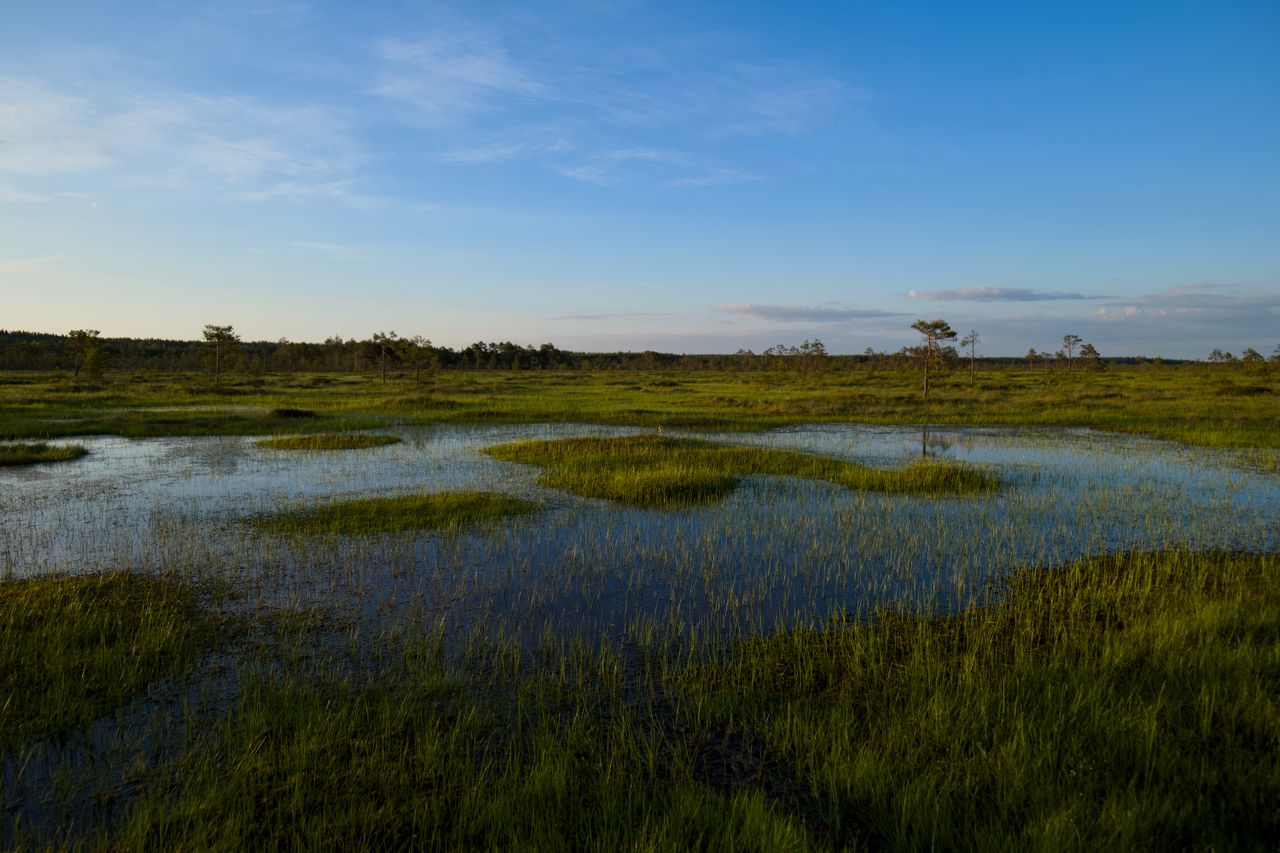
- Peatlands are the most carbon-dense terrestrial ecosystem on Earth. Peat soils contain more than 600 gigatonnes of carbon, representing up to 44% of all soil carbon and exceeding the carbon stored in all other vegetation types including the world’s forests combined. They cover only about 3% of global land. Damaged peatlands are responsible for almost 5% of global anthropogenic CO₂ emissions, a disproportionate amount considering they cover just 0.3% of landmass in their degraded state (IUCN).
- Coastal blue carbon ecosystems punch far above their weight. Mangroves, seagrass beds, coastal salt marshes, and large algae account for less than 0.5% of the seafloor area but contain more than 50% of marine carbon reserves (MDPI Water, 2025).
Beyond carbon, these ecosystems deliver flood protection, drought buffering, pollination, soil fertility, and water security. They are the natural infrastructure that every economy depends on, whether or not that dependence is on the balance sheet.
How nature-based solutions cool the landscapes around us
Nature-based solutions are the conservation, restoration, and sustainable management of ecosystems to deliver climate, biodiversity, and human wellbeing outcomes at once.
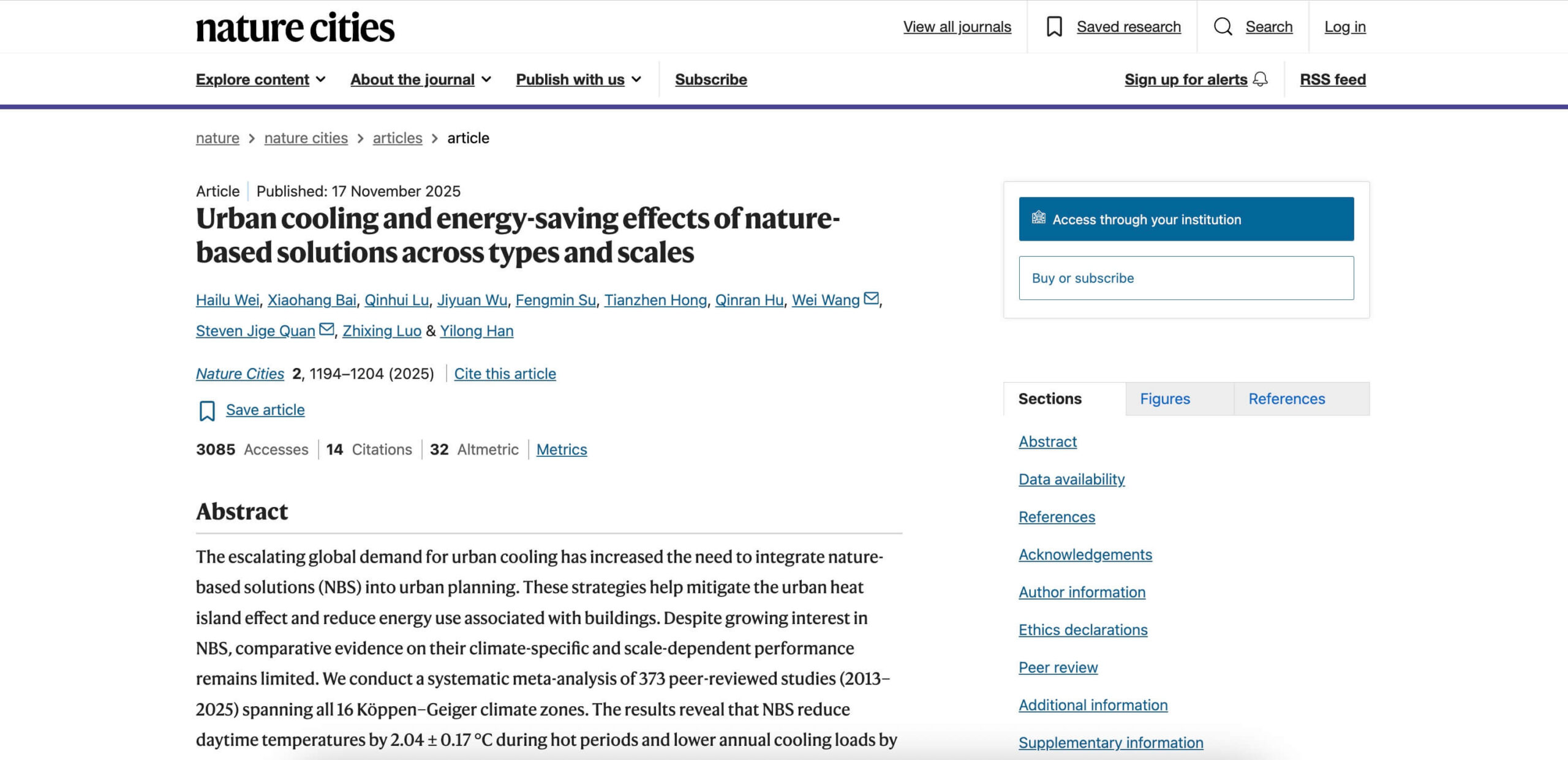
For heat specifically, the evidence is consistent and growing. A meta-analysis of 373 peer-reviewed studies across all 16 Köppen-Geiger climate zones found that nature-based solutions reduce daytime temperatures by 2.04°C during hot periods, with neighbourhood-scale interventions delivering the strongest cooling effects, up to 2.22°C. Green infrastructure outperforms blue infrastructure for both thermal regulation and energy savings across most climate zones (Nature Cities, 2025).
A separate decade-long systematic review confirms the wider range. Urban green spaces can lower temperatures by 1 to 7°C, with cooling intensity influenced by vegetation type, spatial configuration, and urban morphology (ScienceDirect, 2025).
In a heat wave like the one Europe is enduring this week, two to three degrees is not an incremental gain. It is the difference between discomfort and hospitalisation, especially for the elderly, children, and households without air conditioning.
Cooling beyond the city: how restoration shapes regional climate
A fair question to ask is whether all this only matters for cities. Most of the research above focuses on parks, street trees, and green roofs. But what about the restoration and conservation work happening in forests, watersheds, wetlands, and farmland far from any city? Can that affect temperature in any meaningful way?
The short answer is yes. And it can also cool the cities nearby.
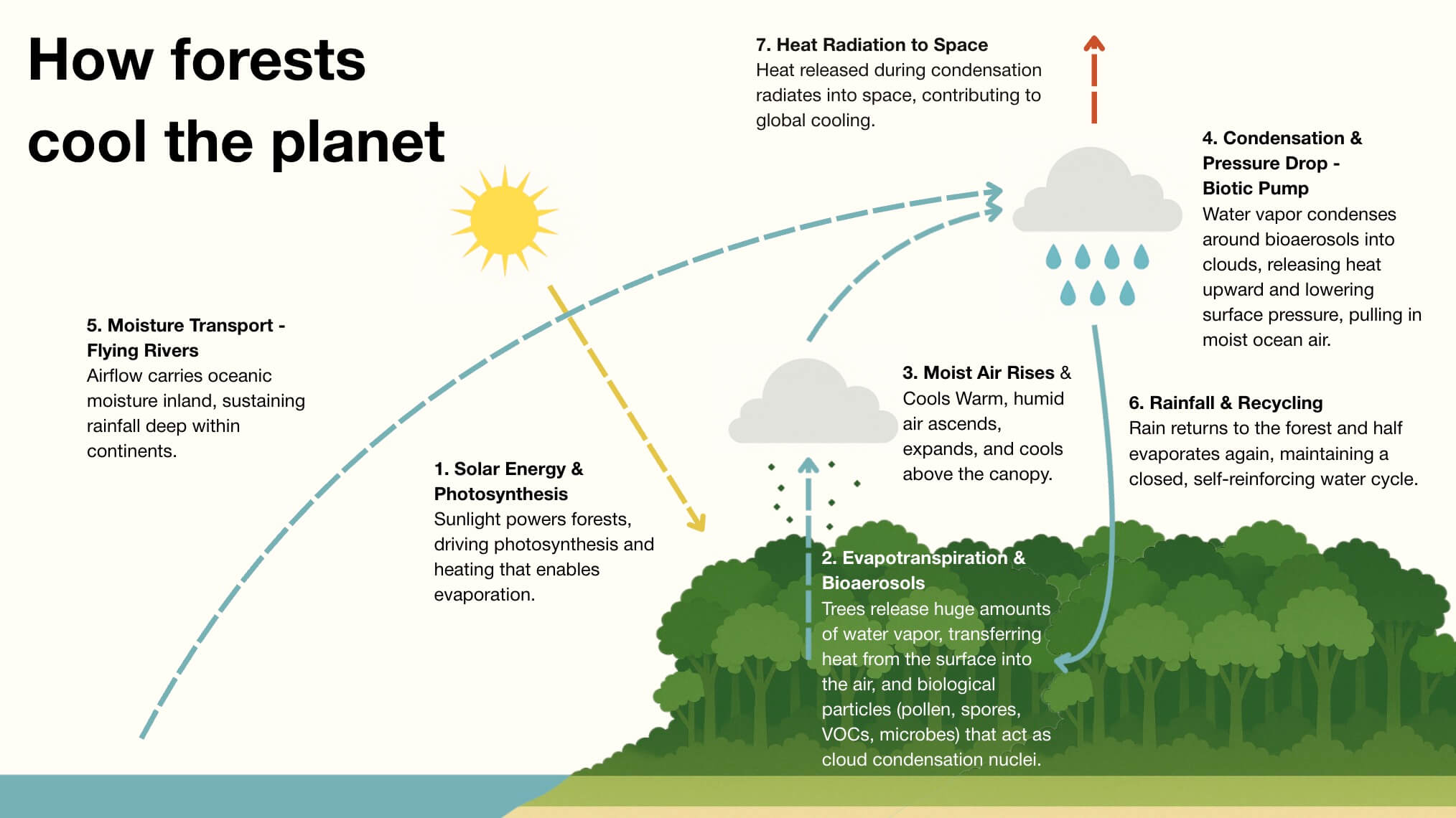
Healthy ecosystems lower temperatures through three simple mechanisms. They shade the ground, so soils and surfaces absorb less heat. They release water vapour through their leaves, a process called evapotranspiration, which works like sweat does for the human body: as the water evaporates, it carries heat away. And their uneven canopies push warm air higher into the atmosphere, where it dissipates (World Resources Institute, 2023).
The results are real and measurable.
In Canada’s Prairie Pothole Region, wetlands cool the surrounding farmland by 1.4 to 3°C on hot days, and on the most extreme days the cooling reaches 5.4°C (ScienceDirect, 2025). During the 2006 North American heat wave, modelled wetland cover reduced the number of hot days by more than ten over a single summer (Water Resources Research, 2022). In the United States, the 1930s Great Plains Shelterbelt, a vast tree-planting initiative across the agricultural plains, lowered regional temperatures by close to 2%, reduced extreme heat days by 13%, and increased rainfall by 4 to 8%. Corn yields rose by more than half (World Resources Institute, 2023).
And yes, this reaches cities too.
A city does not exist in isolation. The air that flows into it comes from the landscapes around it. When those landscapes are forested, wet, and intact, the air arriving in the city is cooler and more humid. When they are degraded, paved, or drained, the city inherits hotter and drier air, which makes its own heat island worse.
Forests, wetlands, and restored land outside cities also feed the local water cycle. Through evapotranspiration, they put moisture back into the atmosphere, which forms clouds, returns as rainfall, and keeps soils and rivers cooler. In tropical regions, scientists describe restored forests as essential for transferring moisture across entire continents, including the rainfall systems that water cities and crops far downwind (World Resources Institute, 2023). In Europe, the same principle applies on a smaller but real scale. The watersheds, peatlands, and forests around Paris, London, Madrid, and Berlin shape the air those cities breathe during a heat wave.
One important nuance is worth noting. In far northern, snow-covered regions, planting forests can sometimes warm the local surface, because dark tree canopies absorb more sunlight than reflective snow does (Nature Communications, 2025). This is why restoration is not one-size-fits-all, and why location-specific monitoring matters. The right intervention in the right place is what makes the difference, and the only way to know that is by measuring it on the ground and from satellites over time.
The economic impact of the climate crisis
The financial logic of ecosystem restoration is increasingly clear, even before regulatory pressure factors in.
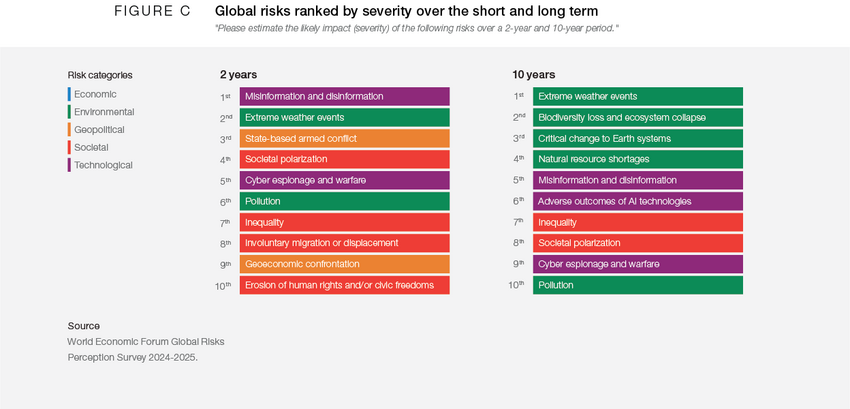
- $44 trillion of economic value generation is currently at risk from nature loss due to moderate or high dependence on nature and its services. The World Economic Forum’s Global Risks Report 2025 identified environmental risks as half of the top 10 global risks over the next decade, with extreme weather, critical changes to Earth systems, and biodiversity loss ranked as the top three.
- Restoring and preserving biodiversity is substantially less expensive than the energy transition, by an order of magnitude according to BCG analysis.
- The mitigation potential is significant. Conserving and restoring forests, agricultural land, and coastal and marine ecosystems can provide around 30% of the emissions reductions needed to limit global warming to 1.5°C.
What is blocking action at scale
Two barriers stand out.
- The first is funding. Private finance for nature reached over $102 billion in 2024, yet nearly $7 trillion still flows annually into nature-negative activities. Global biodiversity finance needs to hit at least $700 billion per year, but public and private flows remain far short of this.
- The second is proof. Too many restoration and conservation projects operate without the verifiable evidence needed to attract sustained capital or hold up to regulatory scrutiny. A self-reported outcome is a claim. A pledged hectare is not a restored hectare. Without continuous, geo-anchored, independently verifiable evidence, even genuinely good work struggles to compete for serious investment, and bad work goes unchecked.
From what we see across the project landscape, this proof gap is the real bottleneck. It blocks finance from reaching the organisations doing rigorous, long-term restoration. It exposes corporate buyers to greenwashing risk. And it slows the policy frameworks that depend on credible data to function.
How OpenForests works on this gap
Strong evidence does not come from monitoring alone. It begins with a clear understanding of what impact actually means for a specific project, in a specific landscape, with specific communities involved. Without that clarity, even the most sophisticated satellite data risks measuring the wrong things.
At OpenForests, we help projects implementers with both methodology and tools. The methodology defines what to measure and why. The tools make it possible to measure it consistently, at the scale of a real project, with verifiable spatial and field-anchored data.
Explore our approach to impact monitoring, Theory of Change, and Interactive Maps, or read case studies from partners working across forests, drylands, and biodiversity hotspots.