September 27, 2026. That’s when the EU Empowering Consumers Directive (EmpCo), officially called the Empowering Consumers for the Green Transition Directive (EU) 2024/825, becomes effective across the EU. National governments had until March 27, 2026 to write it into local law, but the practical deadline for your marketing team is the September date.
If your brand talks about sustainability anywhere near a consumer, this directive changes what you’re allowed to say and how you have to prove it. And if you deliver the projects those claims rest on, it changes what your funders will start asking you for.
What the directive actually bans
Strip away the legal language and the rule is simple: if you can’t back a green claim with evidence, don’t make it. Here’s what falls under scrutiny.
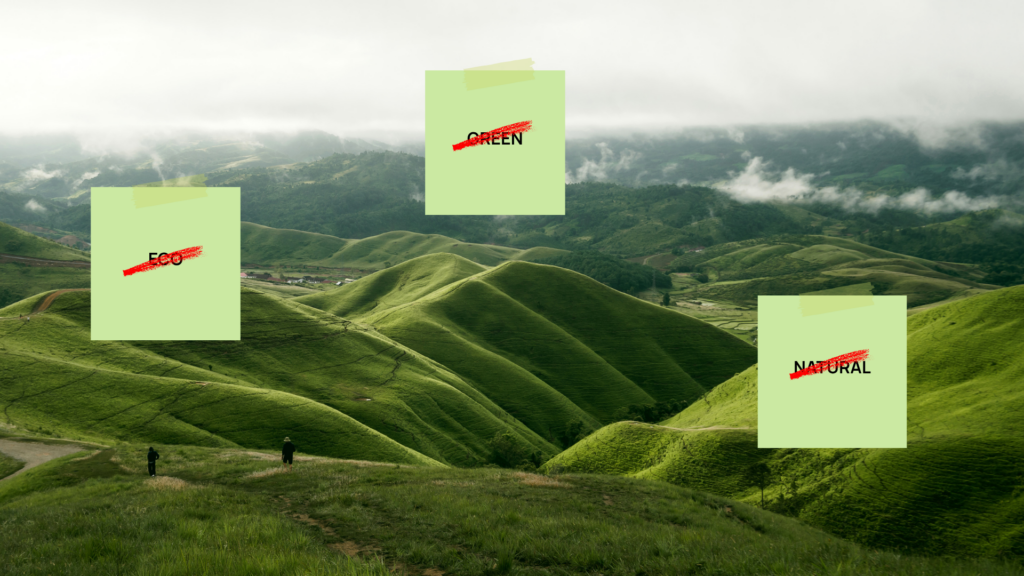
Generic labels without proof. Words like “eco-friendly,” “green,” or “sustainable” are now off-limits unless you can point to recognized environmental performance, something like the EU Ecolabel or an equivalent certified scheme. A trademark with “eco” included in the name doesn’t get a pass either.
Carbon neutrality built on offsets alone. You can no longer call a product “carbon neutral” just because you bought credits to plant trees somewhere unrelated to your supply chain. The claim has to reflect actual emissions reductions inside your own value chain.
Images that imply more than the facts support. A green leaf, a water droplet, a blue-and-green color palette: regulatory authorities will treat these as claims in their own right if the overall impression misleads the average shopper.
Future promises without a plan. “Net zero by 2030” now requires a public, realistic roadmap with measurable targets, and that roadmap needs regular sign-off from an independent expert whose findings the consumer can actually see.
Private labels that only you recognise. Self-created sustainability badges are prohibited. A label only counts if it comes from a recognized third-party certification system or a public authority.
Why this hits hard if you fund or report on nature-based projects
Whether you are involved in organizing restoration projects or funding them, the EmpCo, aka the EU Empowering Consumers Directive, applies to you.
If your brand funds nature-based projects
Companies that sponsor reforestation, ecosystem restoration, or regenerative agriculture projects are exactly the kind of business the directive is watching. Telling customers “we’re carbon neutral thanks to our forest project” is precisely the sentence that now needs receipts: independent verification of any forward-looking commitment, specific and dated numbers, and a way for the consumer to check the source.
The problem many organisations run into isn’t dishonesty. It’s that their proof lives in a PDF report from last year, or in a partner’s inbox, not somewhere a customer or a regulator can access it in two clicks.
Two habits are worth breaking early. The first is claiming at company level what only holds at project level. The directive treats a claim about one product or one contribution differently from a claim about your entire business, and the safer version is almost always the narrower one. The second is describing a contribution as a cause. If you funded 12% of a restoration programme’s budget, you contributed to its outcomes. You did not produce them.
If your organisation delivers the work
EmpCo doesn’t regulate you directly unless you make environmental claims to consumers yourself, and many restoration organisations do: tree gifting, “plant a tree with every purchase” partnerships, donation appeals framed around neutrality. Those claims sit inside the directive’s scope like any other.
The larger change reaches you through your funders. From late 2026, a sponsor who wants to keep talking publicly about your project needs answers that are specific enough to survive a challenge:
- Which site, and what are its boundaries?
- Measured when, and how often since?
- Using which method or indicator, and who collected the data?
- What does the evidence actually show, and what remains uncertain?
- What share of the result can this sponsor reasonably be associated with?
Projects that can answer quickly will be easier to fund. Projects that can’t will watch sponsors say less about them in public, and public visibility is often what sustains long-term corporate support in the first place.
None of this requires perfect results. A programme with a 60% survival rate that reports it openly, explains what it changed in response, and shows the follow-up planting is a far safer partner than one reporting only successes. Honest uncertainty is defensible. Silence and rounded-up numbers are not.
How explorer.land helps you structure the evidence
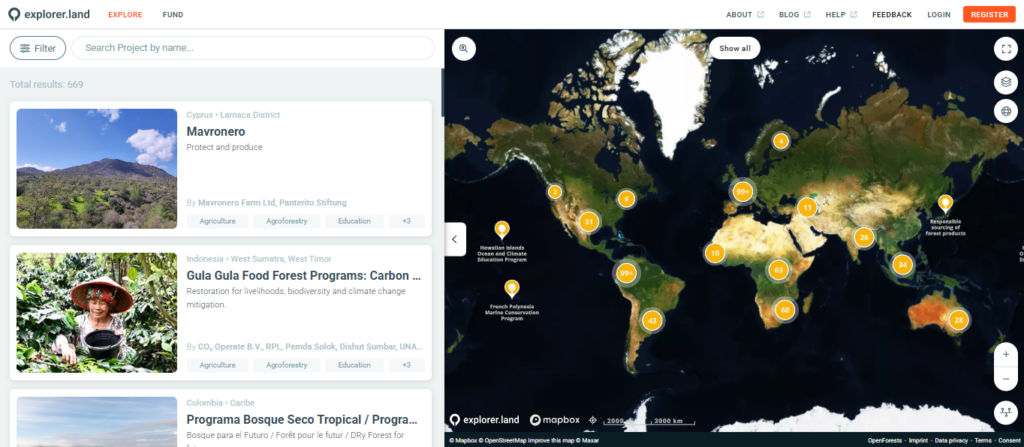
explorer.land makes nature-based project data visible, current, and traceable. It doesn’t certify or verify claims, and no platform can do that on your behalf. What it does is publish the evidence in a form a sponsor, an auditor, or a customer can inspect.
Data with a location, a date, and a method attached. Projects can connect or upload their own data: project boundaries, drone and satellite imagery, ground sensor readings, or KPIs they already track in their own systems. Satellite imagery can be linked to scientific indicators, so a statement about a restored hectare sits next to the measurement behind it and the date it was taken.
Verified data instead of a vague claim. Every project on explorer.land is monitored with satellite imagery which can be directly linked to scientific indicators, so when you say “this hectare of forest is being restored,” there’s a dashboard behind it, not just a press release.
Project-level detail, not corporate-level spin. The directive is strict about claims tied to a specific product or contribution versus a company’s entire activity. explorer.land lets you point to the exact site, the exact metrics, and the exact timeframe your sponsorship covers, so you’re never overstating scope.
A public, checkable link. Article 6(2)(d) requires forward-looking claims to rest on a public commitment with measurable targets, verified by an independent third party. A project page on explorer.land is where that evidence can live and stay accessible: real coordinates, real progress, updated over time, often reached by QR code or URL.
Open data anyone can examine. explorer.land promotes transparency by making data available so that both the general public and experts can examine it for themselves, which is the part of transparency organisations tend to skip. Access is what makes the rest of it checkable.
Projects can upload or connect any data to explorer.land from project boundaries, to drone and satellite imagery, to sensor data from the ground or any KPIs tracked in their own system, thereby illustrating directly the progress of their work.

A quick check
Before your next campaign
Before you publish anything with a leaf, a tree, or the word “carbon” in it, ask:
- Can I name and locate the exact project I’m actually contributing to?
- Can I back my claim with real data, studies, or reports from a trusted source?
- Can people verify it by themselves, right now, without taking my word for it?
- If I’m using a label, is it internationally recognized, or did we make it up ourselves?
- Am I stating a clear goal with measurable KPIs, or just making a promise?
- Am I describing my contribution, or claiming the whole result?
If any answer makes you wince, that’s useful information. Better to catch it now than after September 27 and the entry into effect of the EU Empowering Consumers Directive.
For project teams
Before a sponsor publishes anything about your work, make sure you can answer these:
- Can we share a precise boundary for every site a sponsor’s money touched?
- Can we say when each figure was measured, and point to the method behind it?
- Is our most recent monitoring data accessible to the sponsor without an email request?
- Have we written down what we don’t yet know, alongside what we do?
- Have we agreed with the sponsor how their contribution will be described, in language neither of us would have to walk back?
If the answer to any of these is no, that’s a conversation to have with your funder now rather than in October.

The bigger picture
This directive isn’t trying to punish companies that fund good environmental work. It’s trying to stop the ones that talk about it without doing it, or exaggerate the ones that do. If your sustainability story is real, explorer.land gives you the paper trail to prove it, in a format regulators and customers both trust. A brand’s claim is only as strong as the evidence its project partners can hand over, which makes this a shared problem rather than a marketing one.
Want to see what a verifiable project page looks like for your brand? Explore projects on explorer.land and find out what backing your claims with real data actually looks like.
OpenForests, the team behind explorer.land, works directly with project developers to build the impact monitoring methodology and structure that feed each dashboard, combining satellite data, field indicators, and scientific methodology from the ground up. That groundwork is what turns a project update into evidence a brand can actually stand behind, which is the core requirement running through the entire directive.
Want to see what a project page looks like with the evidence attached? Explore projects on explorer.land, or write to us at contact@openforests.com if you’d like to talk through your own reporting setup.
Where to dig into the regulation itself
This article simplifies the EU Empowering Consumers Directive (EU Empowering Consumers for the Green Transition Directive (EU) 2024/825) so you can act on it quickly, but if you want to go straight to the source, here are two places to go:
- The official directive text on EUR-Lex, the full legal document as published by the EU.
- Directive (EU) 2024/825 explained by diretivas.eu, a plain-language guide built for SMEs, with a practical and extensive checklist if you want to walk through your own claims point by point.