Key highlights
- A wildlife corridor is a strip of habitat that reconnects two areas cut off by roads, farms, or cities, so animals can move safely between them.
- Habitat fragmentation is a leading driver of biodiversity loss, with over 43 million hectares lost across major deforestation fronts between 2004 and 2017 alone.
- Corridors come in several types, from natural rivers and forest strips to man-made wildlife crossings and small stepping-stone patches.
- An 18-year scientific study found connected habitats lose fewer species and recover faster than isolated ones.
- Real examples, from Tanzania’s Ngorongoro elephant corridor to WeForest’s Atlantic Forest programme, show corridors succeeding on the ground today.
- Technology like satellite mapping, used by platforms such as explorer.land and OpenForests, is making corridor management faster and more precise.
Every animal needs a place where it can find food and water, and where it can mate. But across the planet, the wild spaces animals depend on are being split into ever-smaller patches by roads, farms and urban areas.
This problem is called habitat fragmentation, and it’s one of the main reasons wildlife populations are shrinking today. Wildlife corridors were developed in response to this issue.
What is a wildlife corridor?
Before entering into how wildlife corridors work and explore why they matter, let’s begin with the basics.
Wildlife corridor definition and meaning
Wildlife corridors are strips of habitat that connect two larger habitats or ecosystems which have been fragmented by human activities, such as urbanisation, the expansion of farmland, of agroforestry, or other disturbances.
These corridors enable wild animals to move freely and safely from one ecosystem to another, in order to forage for food, connect different populations for mating, or for migration purposes.
The wildlife corridor meaning is easiest to picture with an example: imagine two forests separated by hectares of farmland. Without a corridor, animals in one forest are cut off from food, mates, and shelter in the other. A corridor rebuilds that missing connection.
Wildlife corridors are tools often used in larger rewilding projects, which are typically focused on a single key species. This is the case, for example, with the project led by Rewilding Europe in the Greater Côa Valley in Portugal, which aims to increase the population of the Iberian lynx.
How corridors differ from protected areas
A protected area, like a national park, safeguards one specific piece of land. A corridor links preserved areas together. Without corridors, even well-protected parks can become isolated islands, unable to support healthy, long-term wildlife populations.
Researchers have found that the size of an animal’s usable habitat is one of the strongest predictors of whether its species will go extinct1, which is exactly why linking small, separate areas into one larger network matters so much for survival.
What are the different types of wildlife corridors?
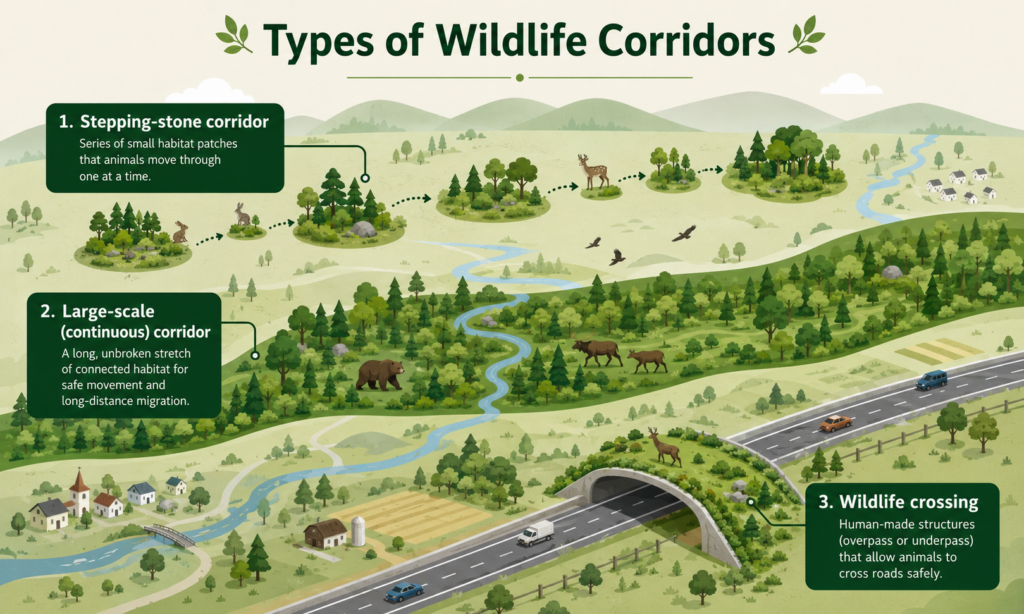
There are several types of wildlife corridor, each suited to different landscapes and species:
- Stepping-stone corridors: a series of small, connected habitat patches that animals use one at a time, like stepping stones across a stream.
- Large-scale (continuous) corridors: long, unbroken strips of habitat spanning entire regions or countries, often used by species that migrate great distances.
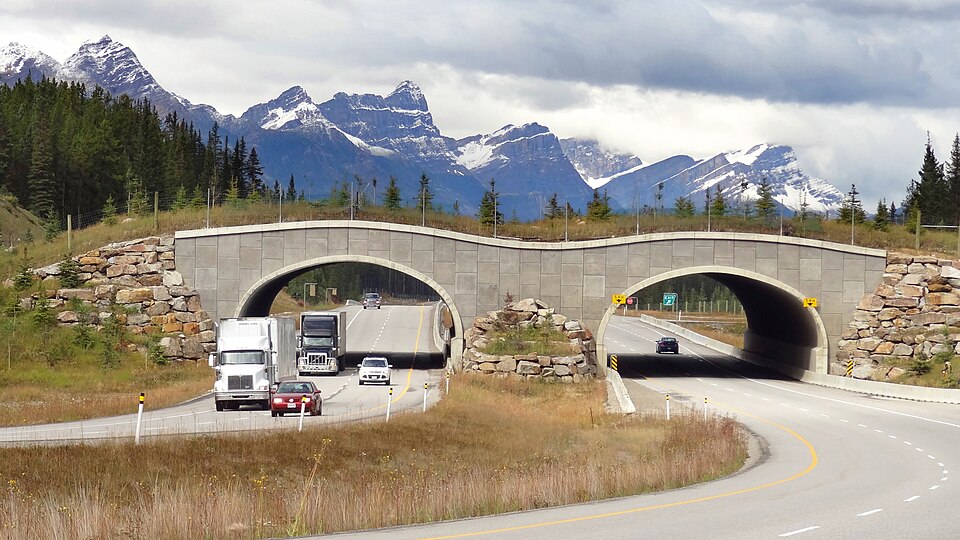
- Wildlife crossings: human-made structures such as overpasses or underpasses built specifically to help animals cross roads safely.
- Natural corridors: rivers, valleys, or strips of forest that already connect habitats on their own.
Corridors also come in different sizes depending on what they’re meant to do. They can be grouped into three scales: regional corridors, which are wider than 500 metres and link major landmasses along migratory routes; sub-regional corridors, wider than 300 metres, which connect large landscape features like ridgelines and valleys; and local corridors, which can be as narrow as under 50 metres and link small patches like woodlands, marshes, or wetlands. As a general rule, a corridor generally needs to be at least 15 metres wide to give animals enough space to travel through, feed, nest, or hide from predators along the way.
Not every animal uses a corridor the same way, either. Some species just pass through on their way somewhere else, while others end up settling and living inside the corridor itself, especially if it’s wide enough to offer real shelter and food.
Why are wildlife corridors important?
Corridors enable populations to better meet their needs by providing more space for sub-populations to forage, breed and migrate across landscapes. But understanding the scale of the threats helps explain even better why corridors matter.
Threats to habitat keep increasing
As forests are cleared and land is “developed”, habitats shrink and break apart. Deforestation is one of the leading causes of this habitat loss and fragmentation, with over 43 million hectares lost within the boundaries of the 24 main deforestation fronts between 2004 and 2017 (WWF)2.
The scale of the problem goes well beyond deforestation alone. The 2019 Global Assessment on Biodiversity and Ecosystem Services, the most thorough report of its kind ever produced, found that human activity has pushed roughly one million plant and animal species toward extinction. The same report found that the average population size of native species across most land habitats has dropped by at least 20% since 1900, that three-quarters of all land on Earth has been significantly reshaped by human activity, and that global forest cover now sits at only 68% of pre-industrial levels (IPBES, 2019)3.
This loss deprives many species of the space and connections they need to survive.

The real cost of habitat fragmentation
When habitat fragmentation isolates a population, several problems follow:
- Limited food and resources, since animals can’t move to find more.
- Reduced genetic diversity, because animals can’t reach others outside their isolated area to breed. Genetic diversity is important for building resilience to diseases and environmental changes.
- Increased vulnerability to disasters, like fires or floods, with no safe route to escape.
- Disrupted migration, breaking patterns some species have followed for generations.
The scientific evidence for this is remarkably solid. One of the longest-running experiments on the subject, an 18-year study led by ecologist Ellen Damschen and her team, tracked habitat patches that were connected by corridors against similar patches left isolated. The connected patches came out clearly ahead: plants in them were about 2% less likely to go locally extinct each year, about 5% more likely to be recolonised after a local extinction, and overall home to 14% more species than the disconnected patches (Damschen et al., 2019)4. After nearly two decades of data, the researchers concluded that restoring habitat connections is one of the most effective tools available for protecting biodiversity.

Restoring Connectivity to reverse the damage
This is where restoring connectivity comes in. By rebuilding the links between fragmented habitats, we restore what scientists call ecological connectivity (Convention on the Conservation of Migratory Species of Wild Animals)5— the ability of animals to move freely across a landscape. This single change can be the difference between a species declining and a species recovering.
What are the benefits of Wildlife Corridors?
The benefits of wildlife corridors extend well beyond individual animals:
- Stronger biodiversity, as populations stay genetically healthy and diverse.
- Reduced human-wildlife conflicts6, by giving animals a route that avoids farmland and villages.
- Enhanced safety, for both animals and people near road infrastructure.
- Better climate resilience, since species can shift toward more suitable areas as conditions change. Some governments, including Australia’s, have pointed to wildlife corridors as a practical way to help ecosystems cope with climate change, partly because native vegetation along corridors also stores carbon7.
- Healthier ecosystems overall, supporting plants, insects, and predators alike.
- Support for local communities, who often depend on the same land for water, food, or livelihoods.
- Everyday extras, like escape cover from predators, shelter during bad weather, and, in cities, greener neighbourhoods.
What are some real examples of Wildlife corridor around the world?
To understand how corridors work in practice, let’s look at two projects tackling the same problem in very different ecosystems: one protecting elephants in East Africa, the other rebuilding forest for jaguars in South America.
The Ngorongoro Elephant Corridor, Tanzania
In Ngorongoro, Tanzania, a corridor just 3 km wide and 10 km long connects the highland forest to the Selela salt lake. More than 1,000 elephants pass through this narrow route every single night to reach food and water.
This corridor is managed by Karatu District, local communities and the Ngorongoro Conservation Area Authority (NCAA), with Wild Survivors working alongside communities and local partners to support safer coexistence with elephants. Local Elephant Guardians patrol the corridor, helping to improve safety for community members and schoolchildren who cross and use the area. Along the Upper Kitete corridor,
Wild Survivors and partners established a beehive fence, managed by local farmers, which helps deter elephants from entering farmland while keeping their movement route open. At the heart of this community-owned project is a local women-led beekeeping and enterprise group, who provide a market for honey and beeswax from the fence and manage a permaculture garden producing food and crops for their enterprises and community. This creates a local cycle of benefit around the corridor, helping keep the hives healthy and occupied, sustain the fence and support longer-term coexistence with elephants.
The project is documented on explorer.land, our platform that maps and monitors real conservation and rewilding efforts globally.

The Wildlife Corridors Programme, Brazil and Argentina
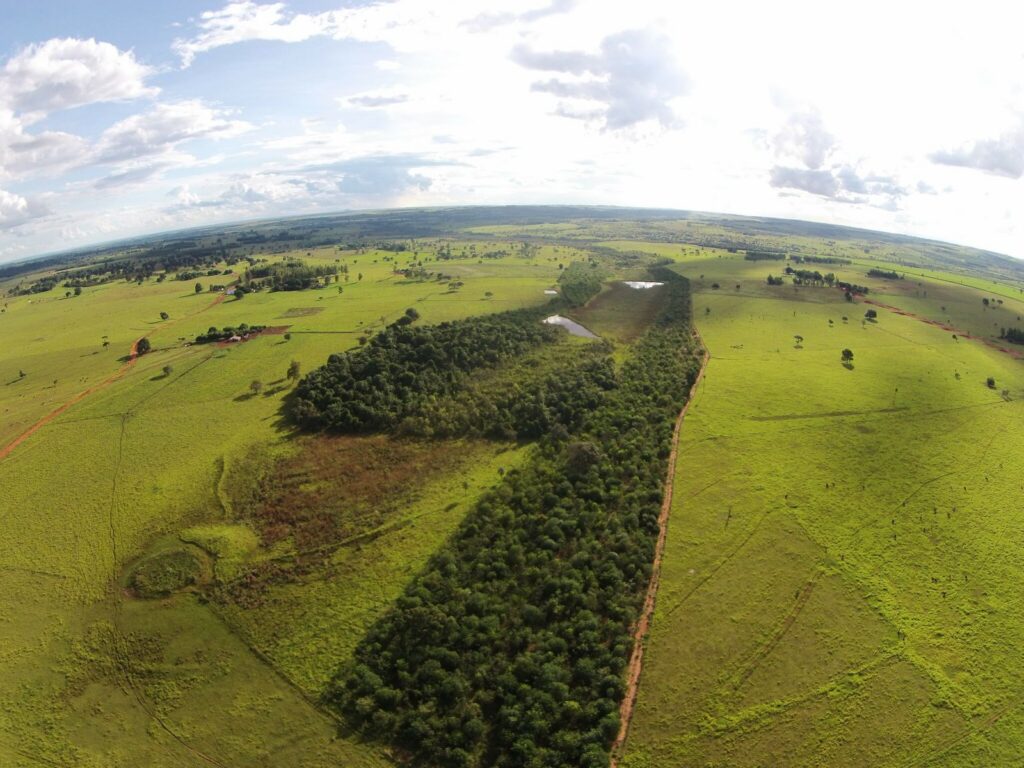
In South America, WeForest runs a wildlife corridor programme focused on the Atlantic Forest, a biodiversity hotspot that has lost most of its original tree cover to farming yet still shelters over 300 amphibian, 250 mammal, 1,000 bird, and 200 reptile species. Working with local partner IPÊ, WeForest replants native trees to reconnect isolated forest fragments across sites in Brazil and in Misiones, Argentina, home to one of the last strongholds of jaguars in the region.
To check whether the restored corridors are actually working, researchers placed sound recorders across the Pontal do Paranapanema region for three years8. The recordings picked up 219 species, including several threatened ones like the black lion tamarin, confirming that wildlife is returning to the reconnected forest.
Together, these two projects show that whether the challenge is an elephant crossing a savanna or a jaguar navigating a forest fragment, the solution is the same: rebuild the path.
Other well-known corridors include Banff National Park’s highway crossings in Canada, the European Green Belt along the former Iron Curtain, the 3,200 km Yellowstone-to-Yukon corridor in North America, and Norway’s Bee Highway through Oslo.
How is technology aiding corridor management?
Conservation organizations increasingly rely on the use of technology to manage wild spaces. Tools like satellite imagery, sensors, camera traps or GIS mapping tools help observing populations and understanding behaviours patterns and changes. They also contribute to responding quickly when a habitat comes under threat.
OpenForests provides tools and methodologies to help organizations make better decisions: mapping and analyzing corridors or potential corridors, and tracking project progress by integrating various types of data, such as remote sensing, camera traps, and field observations.
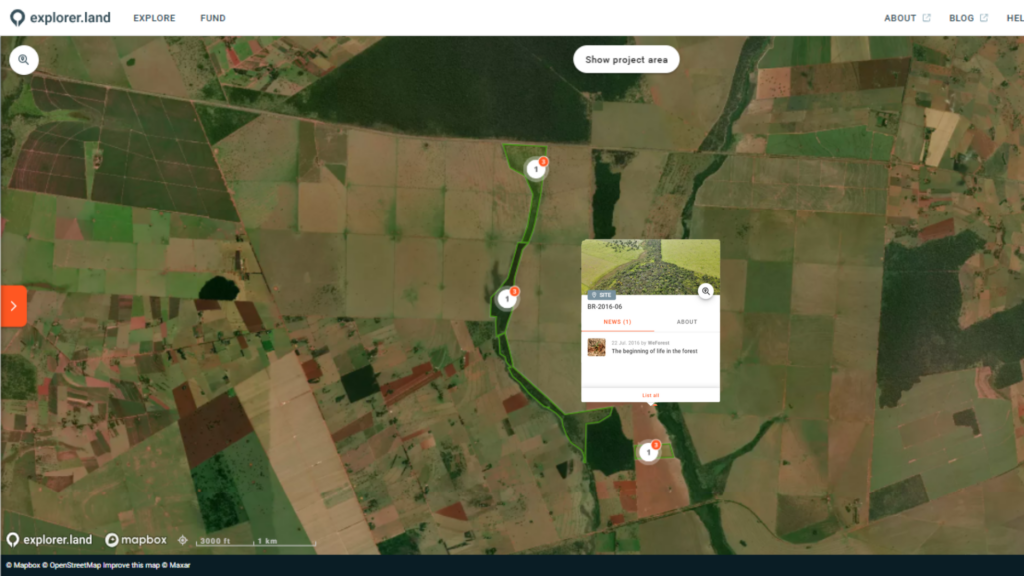
explorer.land makes active conservation and rewilding projects, including the Ngorongoro corridor, visible and trackable to anyone in order to observe their progress. The platform enables organizations to manage, map, monitor, and report on their impact.
It offers simplified data management integrated with their existing tools, as well as clear, centralized visualizations that can be shared with the public and/or their stakeholders.
These tools don’t replace the rangers and communities doing the work on the ground. They make that work more precise, better informed, and easier to scale.
Conclusion
Wildlife corridors address one of conservation’s most pressing challenges: reconnecting habitats that human development has torn apart. Nearly two decades of research now back this up directly, showing that connected habitats lose fewer species and recover faster than isolated ones. From elephant highways in Tanzania to bee-friendly rooftops in Oslo, corridors prove that when we rebuild the links nature relies on, nature responds.
Interested in supporting this work? Visit explorer.land to explore active projects like the Ngorongoro Elephant Corridor. Supporting these efforts helps keep vital corridors open for the species that depend on them.
Footnotes
- Beyer, R.M. and Manica, A. (2020). Historical and projected future range sizes of the world’s mammals, birds, and amphibians. Nature Communications. https://www.nature.com/articles/s41467-020-19455-9 ↩︎
- WWF. Deforestation fronts data, 2004–2017. https://www.wwf.ch/sites/default/files/doc-2021-01/Deforestation%20fronts%20-%20drivers%20and%20responses%20in%20a%20changing%20world%20-%20full%20report.pdf
↩︎ - IPBES (2019). Global Assessment Report on Biodiversity and Ecosystem Services. Intergovernmental Science-Policy Platform on Biodiversity and Ecosystem Services. https://ipbes.net/global-assessment
↩︎ - Damschen, E.I. et al. (2019). Ongoing accumulation of plant diversity through habitat connectivity in an 18-year experiment. Science, 365(6460), pp.1478-1480. https://www.science.org/doi/10.1126/science.aax8992
↩︎ - Convention on the Conservation of Migratory Species of Wild Animals (CMS). Definition of ecological connectivity. https://www.cms.int/topics/ecological-connectivity
↩︎ - Chirisa, I., Mphambukeli, T.N., Magande, T., Mukamuri, B.B., Nyamugadza, E. (2026). Wildlife Corridors for Ecosystem Services: Rethinking Human-Wildlife Conflict in Southern and Eastern Africa. In: Brears, R.C. (eds) The Palgrave Handbook of Nature-Based Solutions. Palgrave Macmillan, Cham. https://doi.org/10.1007/978-3-031-72931-7_13-1
↩︎ - Australian Government, Department of Climate Change, Energy, the Environment and Water (DCCEEW). What are wildlife corridors? https://www.dcceew.gov.au/environment/biodiversity/conservation/wildlife-corridors ↩︎
- WeForest & WildMon & IPÊ. Ecoacoustic Biodiversity Monitoring in Restoration Wildlife Corridors of Pontal do Paranapanema, Brazil (2025). https://ebacoy2g8cy.exactdn.com/wp-content/uploads/2025/05/Acoustic-Monitoring-of-Biodiversity-in-Pontal_FINAL-REPORT_WildMon-April-2025.pdf ↩︎