Key highlights
- Forest restoration goes far beyond simply planting trees and depends on the type of forest that results, whether it is primary, secondary or a plantation, as not all forests have the same ecological impact.
- Primary forest cannot be recreated by planting. Once lost, it doesn’t come back on a human timescale, no matter how much restoration follows.
- Two projects can plant the exact same number of trees and end up with very different outcomes, because the resulting forest type comes down to species selection and site matching, not tree count.
- Genuine ecosystem restoration depends on monitoring over years, not a single planting event, since survival, natural regeneration, and resilience only become visible over time.
- A short checklist, native species, provenance, multi-year monitoring, independent verification, is offered to help separate genuine restoration from a planting statistic.
“Ten million trees planted.” Headlines like this show up often, and they’re usually meant as good news. But on their own, they don’t say much about what actually happened on the ground. Did the trees survive past year one? Are they native species, suited to that soil and climate? Is it a forest, a single-species plantation, or a mixture of the two?
This is the gap at the center of a lot of restoration conversations: the difference between output, outcome and impact. Restoring a forest isn’t just about planting trees (ResearchGate). What matters just as much is which type of forest results, how it was established, and what happens to it over the following years and decades. This post walks through the main types of forest that restoration work can produce, and why treating them as interchangeable does not do justice to what ecosystem restoration actually requires.
Planting trees is not the same as restoring a forest
A planting number is easy to report and easy to share. It’s also, by itself, a weak indicator of ecological impact. It doesn’t tell you the survival rate a year later. It doesn’t say whether the species planted were native to the site or chosen mainly for fast growth. And it doesn’t distinguish between a project that results in a diverse, self-sustaining forest and one that results in a single-species stand that needs ongoing management to survive.
The word “reforestation” gets used loosely enough to cover both cases, which makes it hard to tell one from the other without digging deeper. A monoculture plantation and a naturally regenerating native forest can both, technically, involve planting trees. They are not the same type of forest, and they don’t deliver the same ecological outcomes. That distinction is the starting point for reading any restoration claim with the right amount of scrutiny.
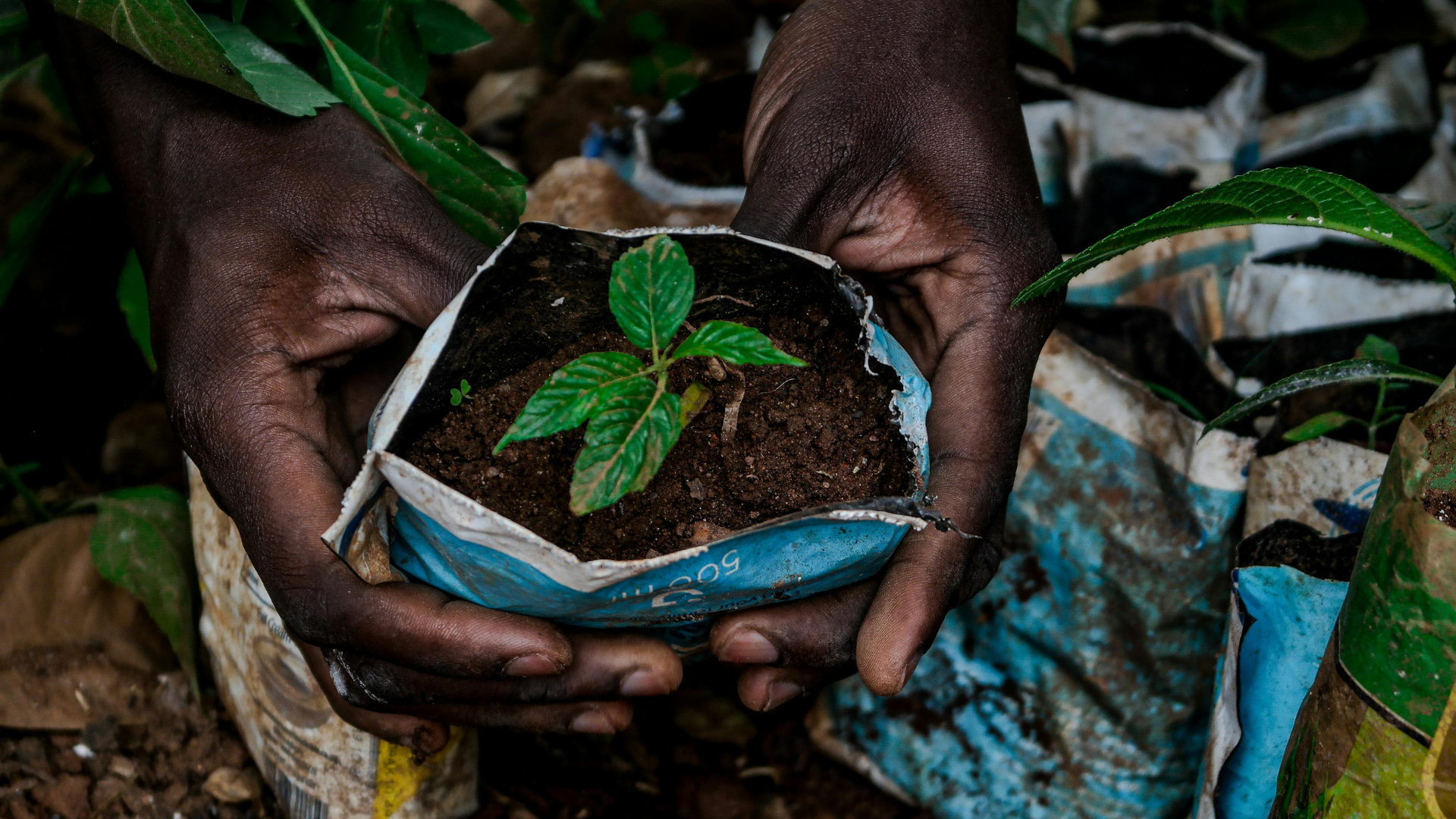
The different types of forest a restoration effort can produce
Understanding the different types of forest in the world helps make sense of what a given restoration project is realistically aiming for, and what it can actually deliver.
Primary forest
Primary forest is the product of decades to centuries of undisturbed growth. It presents little to no visible sign of human disturbance and ecological processes unfold there according to their own dynamics. It cannot be made to grow back. If cleared, it does not regrow within a human timescale. Primary forests carry a kind of value that time alone builds and that no planting effort can shortcut: once lost, they’re gone for generations, if not permanently.
Secondary forest
It consists in land that regrows, naturally or with some assistance, after logging, fire, or agricultural clearing. Secondary forest can recover a meaningful share of biodiversity and carbon storage over time, particularly with active management, but it remains more exposed to further disturbance and takes decades to approach the ecological complexity of the forest it replaced.
Plantation forest
They are the forest established deliberately, usually for a single output such as timber, pulp, or rubber. Plantations can be productive and, depending on species mix and management, and can also support some biodiversity. But a single-species plantation is structurally simple compared to a naturally regenerating forest, and it is not designed to replicate one.

A quick way to compare them:
| Primary forest | Secondary forest | Plantation/ Agroforestry | |
|---|---|---|---|
| Time to ecological maturity | None needed (already there) | Decades | Does not apply in the same way, since it’s managed for a specific output rather than left to mature naturally |
| Species diversity | High | Intermediate and increasing over time | Typically low |
| Carbon storage per hectare | Stores the most | Builds up over time | Vary widely depending on species and rotation length |
| Resilience to disturbance | Generally higher | More variable | Often lower due to limited species and structural diversity |
Beyond planting: what restoring an ecosystem actually involves
Restoring an ecosystem is a longer and more complex process than simply planting trees, and it usually involves a number of decisions made well before the first tree is planted.
Native species selection and site matching
The species planted need to suit the soil, climate, and elevation of the specific site, and ideally reflect what grew there before disturbance. Fast-growing, non-native species are sometimes chosen because they establish quickly, but they don’t always support the same web of dependent wildlife and biodiversity as native species do.
Natural regeneration versus active planting
In some degraded landscapes, removing the pressure that caused deforestation (grazing, repeated fire, clearing) is enough for a forest to regenerate on its own from a nearby seed source. In others, especially where soil is depleted or seed sources are far away, active planting is necessary to get the process started. Knowing which situation applies to a given site changes what “restoration” should actually look like there.
Monitoring over years, not just a planting event
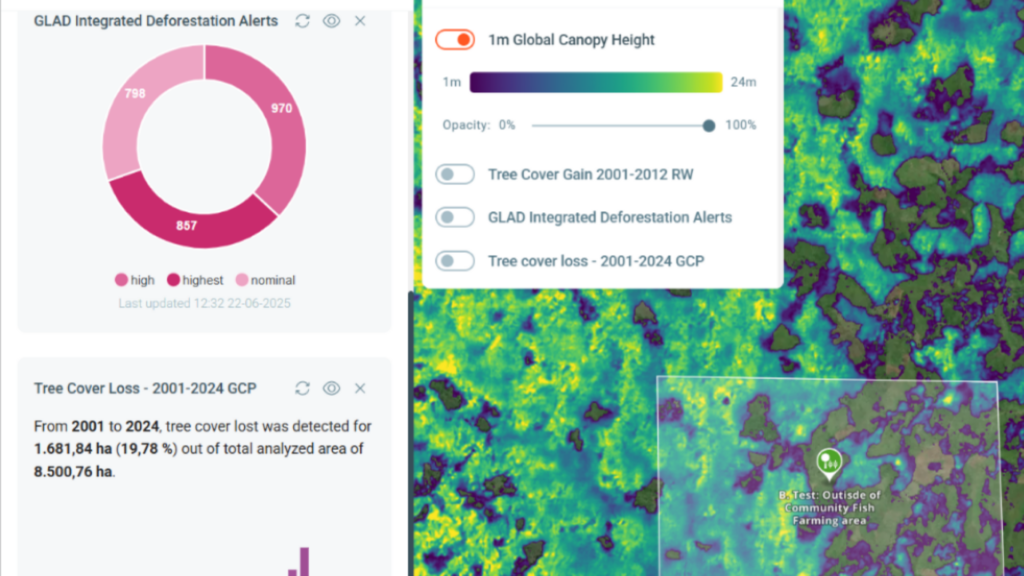
A forest’s trajectory only becomes visible over time: which trees survive, whether undergrowth and wildlife return, whether the area is holding up against fire, drought, or any other form of encroachment. A planting event is a single data point. What happens in the following five, ten, or twenty years is where the real evidence lives (British Ecological society).
It is at this preliminary stage that the type of forest influences the design of a project.
In this episode of our Beyond the Canopy podcast, Andreas Eke, co-founder of Generation Forest, talks about building mixed-species tropical forests that structurally resemble rainforests and generate income through selective timber harvest, while being upfront that the result is not a primary forest and was never meant to be one. It is what Alexander Watson, host of the podcast and CEO of OpenForests, calls a “fake” rainforest. It’s a useful example precisely because it doesn’t overstate what it is: a productive, biodiverse forest system built on degraded land, evaluated on those terms rather than compared to something it isn’t trying to be.
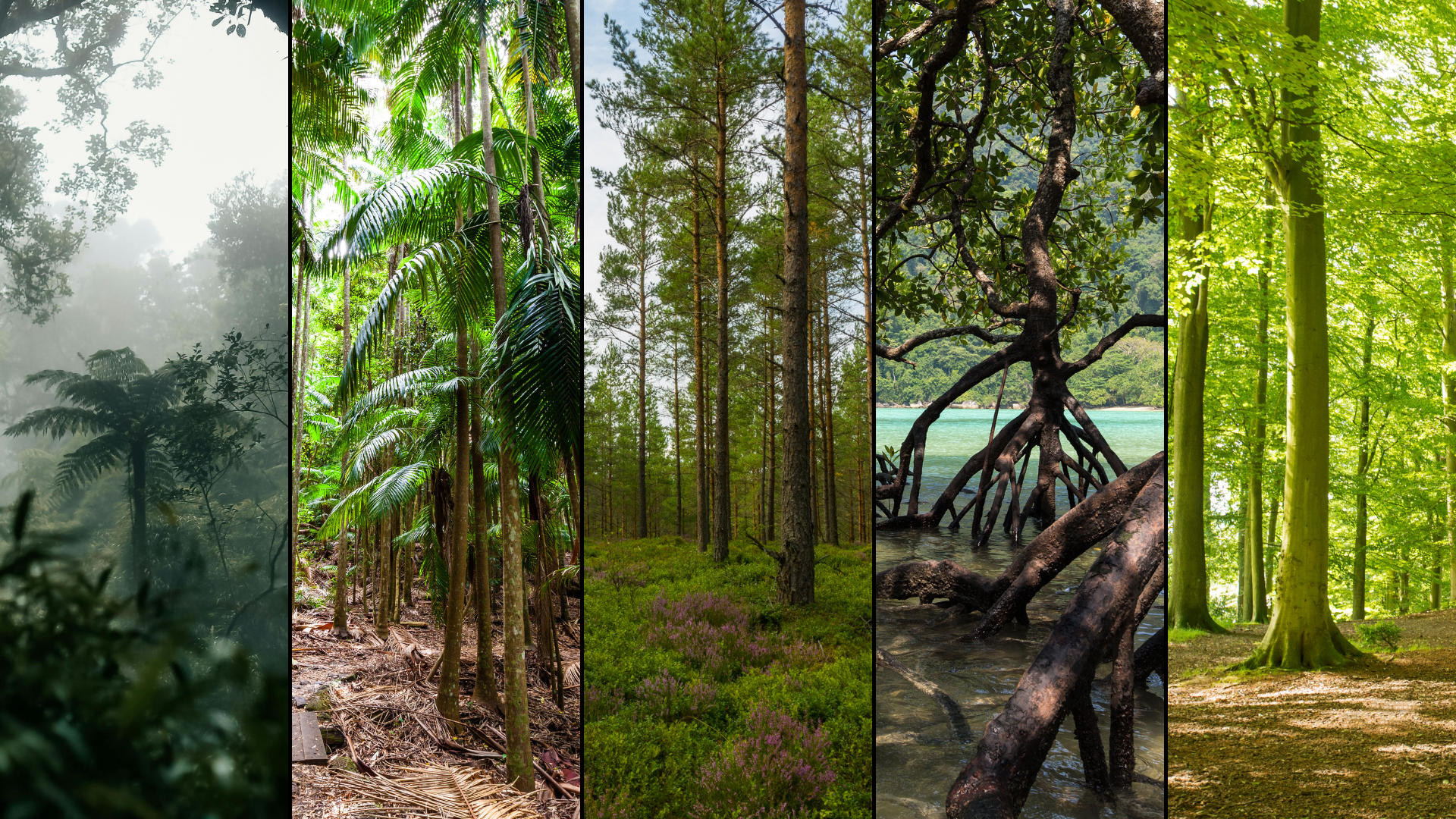
5 types of forest you’ll encounter in restoration work
Beyond the primary, secondary, and plantation categories, forests are also classified by climate and region. Here are five you’ll come across often in restoration and conservation work:
- Tropical forests: warm, high-rainfall regions near the equator, generally the most species-dense forest type on Earth
- Temperate forests: distinct seasons, moderate rainfall, found across much of North America, Europe, and East Asia
- Boreal forests: the northern conifer belt across Canada, Scandinavia, and Russia, adapted to cold winters and short growing seasons
- Mangrove forests: coastal, salt-tolerant, found where rivers meet the sea, important for coastal protection and carbon storage in their soils
- Dry and deciduous forests: shed leaves seasonally in response to drought rather than cold, found in regions with a pronounced dry season
This is a non-exhaustive list, which can also be referred to as the ‘four types of forest’, generally classified according to climate: tropical, temperate, boreal and Mediterranean or dry.
Within each of these, forests can further be primary, secondary, or planted, depending on their history of disturbance and human intervention.
How to tell if a reforestation project is restoring an ecosystem, or just planting trees
A few questions help separate the two:
- Are the species native to the site, and sourced from local or regionally appropriate provenance?
- Is there a monitoring plan that tracks survival and forest development over multiple years, not just at planting?
- Is there evidence of natural regeneration beginning on its own, alongside whatever was actively planted?
- Is the data behind the claims available for independent review, rather than self-reported only?
None of these questions require specialized expertise to ask. They just require treating “reforestation” as something to verify, not something to take at face value.
Conclusion
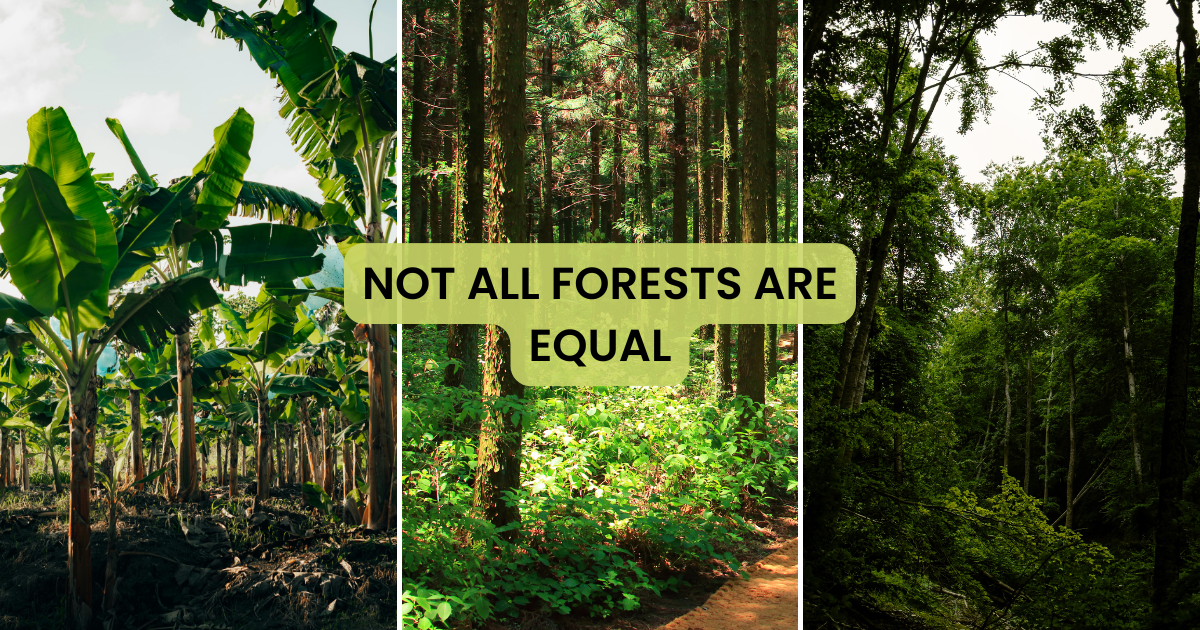
Not all forests are equal, and not all tree-planting amounts to forest restoration. The type of forest that actually results, primary, secondary, or plantation, determines what it can deliver for climate, biodiversity, and the people who depend on it. Keeping that distinction in view is what separates a genuine restoration outcome from a planting statistic.
Ready to look closer at what a forest is actually delivering?
OpenForests helps restoration and conservation projects turn intentions into evidence, combining satellite-based monitoring through explorer.land with hands-on consultancy in impact measurement. If you’re evaluating a project, or building one, and want to know what it takes to move from good intentions to proven impact, explore explorer.land or get in touch with our team.